


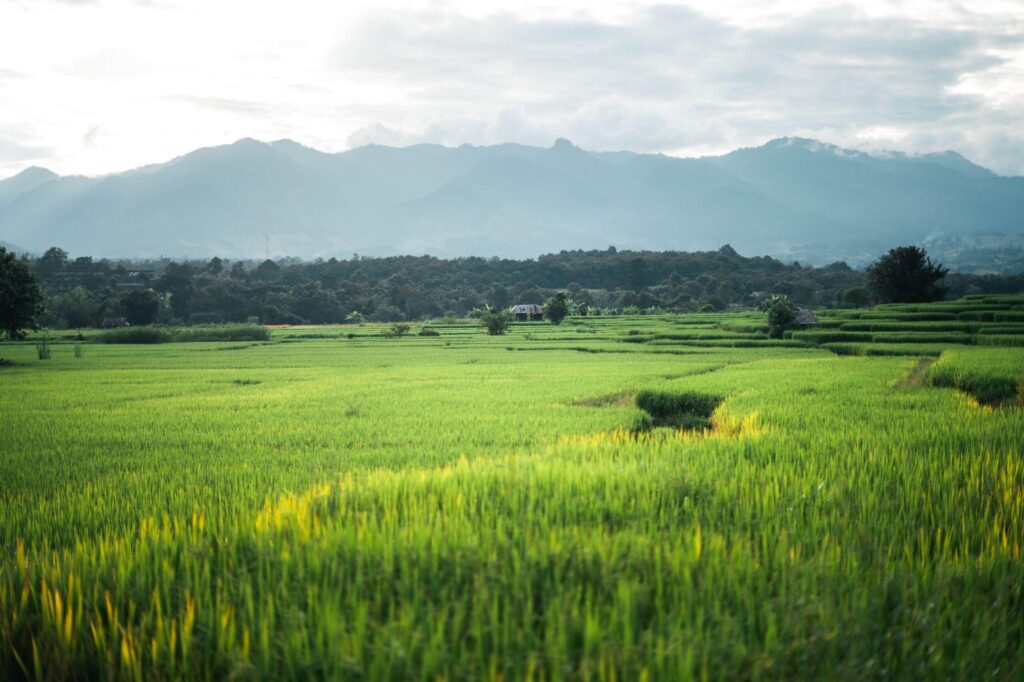
For many Malaysians, a day without rice feels incomplete—it’s more than just food; it’s comfort and identity.
But little do we realize, the constant supply of rice we enjoy comes with many challenges for you, farmers. Increasing paddy yields is never straightforward, as achieving a consistently bountiful harvest is far from easy.
Across Malaysia, farmers must navigate a host of factors that can impact the crop, from unpredictable weather to soil conditions and pest infestations. So how do Malaysian farmers manage to increase paddy yields despite all the factors that can affect their harvests?
1. Land/ Area Invested
It goes without saying that the more paddy land you plant, the more rice you produce. The amount of land dedicated to paddy plantation is crucial for the overall yield.
Did you know that if the harvested area increases by 1%, paddy production increases by approximately 0.75%? Without adequate land, even skilled farmers cannot significantly increase rice production.
The key is to prevent agricultural land from being lost to housing and industrial development, as it directly impacts the national rice supply. Everything else helps, but land is the foundation of rice, and its size matters more than yield per acre.
2. Heat & Temperature Stress
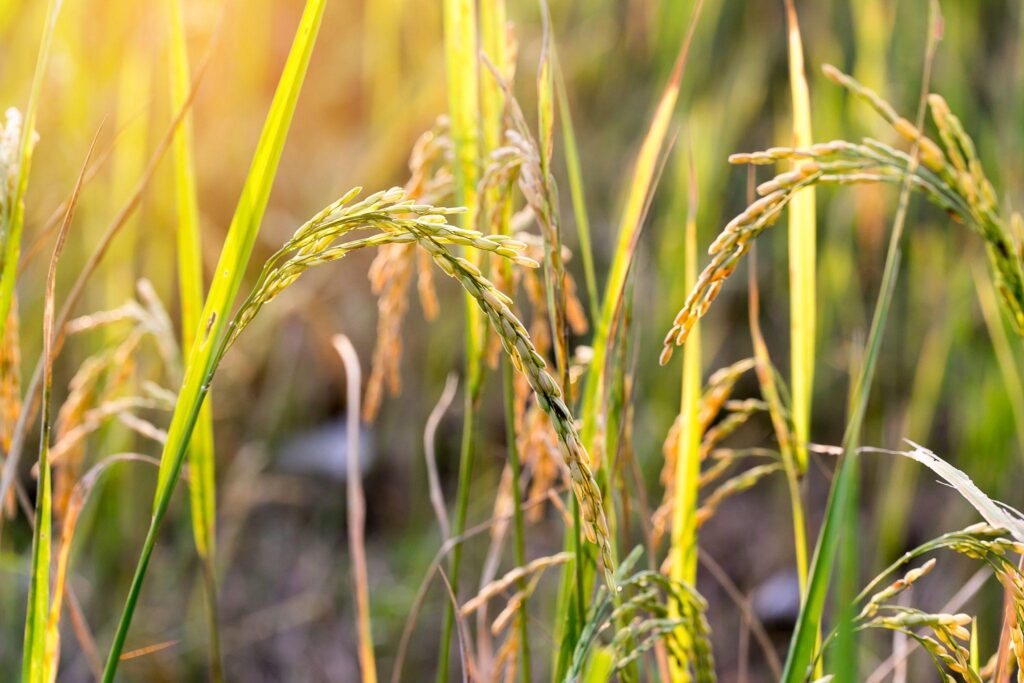
As temperatures rise, paddy yields go down. Even a small increase of 1% in temperature has been shown to decrease production by about 0.45%. So, heat directly affects the growth and grain production of rice plants.
Each rice variety has a temperature limit. When the temperature exceeds this limit, plant growth becomes stressed, water demand increases, and overall production declines.
In a hot country like Malaysia, rising temperatures can cause crops to lose more water and soils to dry out faster. This weakens the flowering process, produces lighter grains, and ultimately leads to lower yields.
Even when fertilizer helps increase yield, more fertilizer does not always mean more rice. If fertilizer use increases by 1%, production increases by about 0.19%.
3. Fertilizer Usage
So yes, fertilizer helps, but the increase is smaller compared to land, which gave 0.75%. Because if you use too much fertilizer, these things would happen instead of increasing the yield:
- soil quality drops,
- costs increase,
- profit decreases, and
- environmental damage occurs.
What most farmers already experience when there is too much fertilizer, paddy cannot absorb nutrients efficiently, so the yield does not improve much. In turn, fertilizer becomes less effective and more damaging to the soil over time.
4. Soil PH/ Soil Health
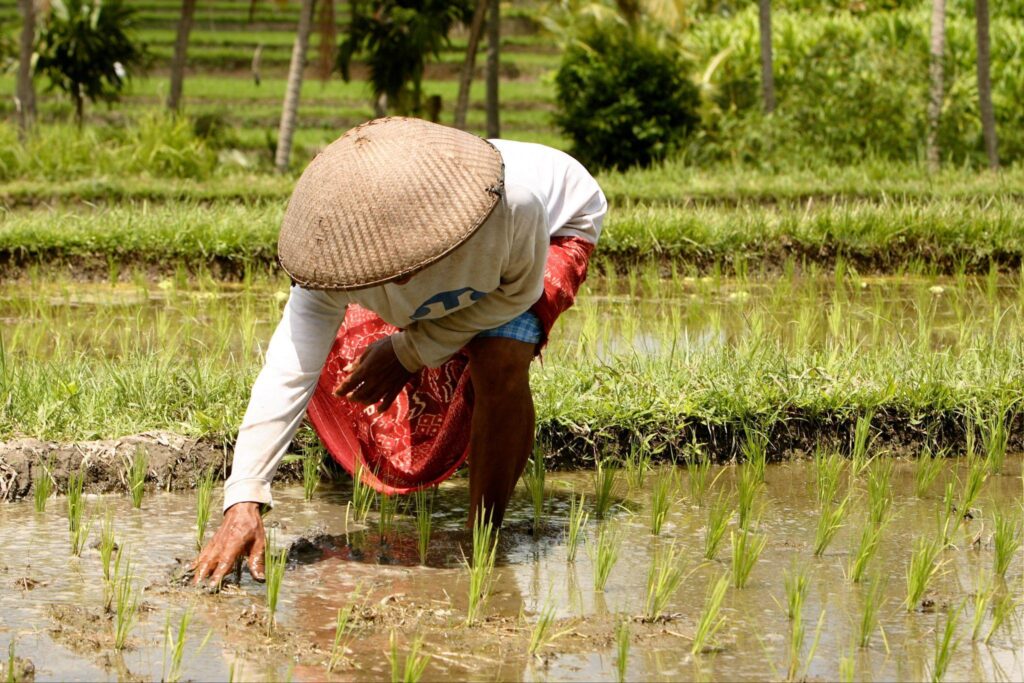
Even with quality fertilizer, the condition of your soil is the primary factor in determining how effectively the fertilizer works.
Unhealthy soil hinders plants from absorbing nutrients properly. When the soil is healthy, it strengthens the roots, which absorb nutrients better and, in turn, produce a higher yield.
However, if the soil is unhealthy, fertilizer becomes an expensive waste. To ensure that plants benefit fully from fertilizer application, soil pH is important. It indicates whether the soil is too acidic, alkaline, or balanced.
Soil becomes acidic when too much nitrogen is used. The key is to always use it in balance.
5. Irrigation & Water Management
It’s when and how you make use of the rain that matters more than how much rain you get. But rain alone couldn’t guarantee a blooming harvest.
Total yearly rainfall doesn’t directly impact total yearly production, simply because too much or too little rain during flowering at once is harmful. Both extremes are bad for paddy yield when:
- Drought means the paddy would be dry
- Too much rain means the soil will flood
During the flowering and grain filling stages, rice yield drops if water conditions are unstable; rice requires steady water, not sudden changes.
6. Farmer Knowledge & Training
The farmer’s knowledge and skills are just as important a factor. With the same land and inputs, a knowledgeable farmer will typically yield a better harvest.
Expert farmers would operate more efficiently when using fertilizer or managing water. They would know when to plant, or apply fertilizer, or control pests, just to improve yield.
However, these already expert farmers have to be open to learning new techniques, using new machines, and following updated farming guidelines when needed in order to achieve better results. All the paddy field needs is a farmer who knows how to use technology properly to yield better.
7. Choose the Right Paddy Variety
Some varieties produce more yield than others, so not all seeds give the same results. High-yield varieties can increase total production compared to traditional types.
As Malaysia becomes hotter, choose varieties that tolerate heat better and avoid heat-sensitive varieties, especially during the flowering stage.
Since our country is aiming to increase rice self-sufficiency, using better-performing varieties is one way to close the productivity gap. The key is to select the right seed that can increase yield without increasing land or fertilizers.
So before planting, ask yourself: Is this variety suitable for your area? Sometimes choosing the right variety is easier and more effective than expanding the land.
8. Modern Machinery and Technology
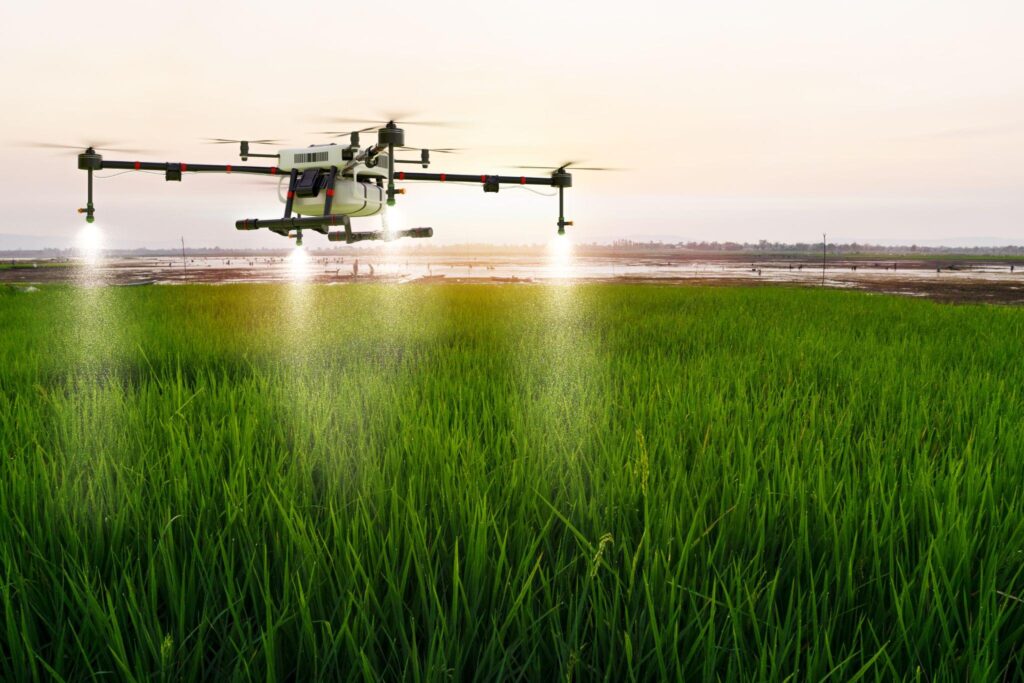
If you use better tools, you will have better control and achieve higher yields. Better tools not only save time but also reduce labor costs, while allowing you to apply fertilizer more accurately and harvest faster with less grain loss. For example, a transplanter plants evenly, which leads to better spacing and stronger plant growth. A drone can spray fertilizer or pesticides evenly with less waste, and a modern harvester reduces broken grains. So, it’s not about being high-tech, but about working smarter, not harder.
9. Pest & Ecosystem Management
You have to let nature help you control pests, not just rely on chemicals.
Instead of depending only on chemicals, remember that birds eat insects in the field, dragonflies eat mosquito larvae and other pests, and healthy fields attract natural predators. When you spray too much pesticide, you also kill helpful “friendly” insects.
As a result, pests may come back stronger, and costs increase along the way. So, if your paddy field has a healthy ecosystem, it will have fewer pests and stronger crops.
10. Harvest & Post-Harvest Handling
Even if your field yield is good, poor handling after harvest can reduce your final income. After the crop is ready, some of the yield may be lost. Losses can occur during harvesting, threshing, drying, or storage.
If harvesting is delayed, the grains may fall from the panicle. If harvesting is done too early, the grains may not be fully developed. Poor drying can lead to mold growth, and rough handling can cause broken grains.
So, proper handling of the harvest is just as important as proper cultivation of the paddy. The less you lose of what you grew, the more money you keep in your pocket.
Key Takeaway
While land size is the most powerful structural factor, heat stress could be the biggest threat to future yield, and fertilizer management is the most controllable input.
At the end of the day, it’s about managing the other fundamentals well — soil health, water, paddy variety, technology, a healthy ecosystem, post-harvest handling — and most importantly, how effectively you use your farmers’ knowledge.
Two farmers can have the same land, same fertilizer, and same rainfall, yet get different yields. Why? Because with the farmer’s knowledge you have, you decide how close you get to your potential yield.
References
- Aprillya, M. R., & Suryani, E. (2023). Simulation of System Dynamics for Improving the Quality of Paddy Production in Supporting Food Security. Journal of Information Systems Engineering and Business Intelligence, 9(1), 38–46. https://doi.org/10.20473/jisebi.9.1.38-46
- Awotide, B. A., Karimov, A. A., & Diagne, A. (2023). Influence of soil properties on technical efficiency of paddy production: Evidence from Malaysia. Jurnal Ekonomi Malaysia, 57(2), 115–129. https://www.ukm.my/jem/wp-content/uploads/2023/10/jeko_572-9.pdf
- de Andrade França, J., Latini, A. O., Stein, K., Barbosa, M. A., Araújo, G. S. S., & Pereira, A. C. P. (2024). Enhancing rice yield in paddy fields through beneficial organisms. Journal for Nature Conservation, 77, 126544. https://doi.org/10.1016/j.jnc.2023.126544
- Gumel, D. Y., Abdullah, A. M., Sood, A. M., Elhadi, R. E., Jamalani, M. A., & Ben Youssef, K. A. A. (2017). Assessing paddy rice yield sensitivity to temperature and rainfall variability in Peninsular Malaysia using DSSAT model. International Journal of Applied Environmental Sciences, 12(8), 1521–1545. http://www.ripublication.com/ijaes17/ijaesv12n8_05.pdf
- Khoo, K. O., Wongwai, K., & Wong, K. K. S. (2025). A Comprehensive Analysis of Factors Affecting Paddy Production in Malaysia. Malaysian Journal of Agricultural Economics, 32(1), a0000615. https://doi.org/10.36877/mjae.a0000615
- Shahidan, M & Fatah, F & Lim, H. (2022). Econometric modelling for estimating of paddy yield and rice production in Melaka, Malaysia. IOP Conference Series: Earth and Environmental Science. 1059. 012078. 10.1088/1755-1315/1059/1/012078
- Yusof, Z. M., Misiran, M., Baharin, N. F., Yaacob, M. F., Abdul Aziz, N. A., & Sanan, N. H. (2019). Projection of paddy production in Kedah Malaysia: A case study. Asian Journal of Advances in Agricultural Research, 10(3), 1–6. https://doi.org/10.9734/ajaar/2019/v10i330030
- Zhu, H., Wen, T., Sun, M., Ali, I., Sheteiwy, M. S., Wahab, A., Tan, W., Wen, C., He, X., & Wang, X. (2023). Enhancing Rice Yield and Nitrogen Utilization Efficiency through Optimal Planting Density and Reduced Nitrogen Rates. Agronomy, 13(5), 1387. https://doi.org/10.3390/agronomy13051387

