


Durian, the king of fruits, is highly valued across Southeast Asia for its taste and economic importance. But while durian trees are profitable, they are also vulnerable to serious root diseases that can reduce yield or even kill trees.
One of the biggest threats to durian production today is commonly known as Black Root Rot “Durian Canker disease”. This disease affects not just durian, but many tropical crops, making it a major agricultural threat in Southeast Asia.
If you are managing a durian orchard, understanding this disease early can help you prevent heavy losses.
What Causes Black Root Disease in Durian?
The main culprit behind black root disease, “Durian Canker,” is Phytophthora palmivora, a fungus-like organism (called an oomycete) that survives in soil and thrives in warm, wet conditions.
This pathogen is dangerous because it can infect almost every part of the durian tree:
- Roots
- Trunk and branches
- Leaves
- Fruit
- Young seedlings
It does not just rot the roots. It can infect leaves, trunks, and fruit, causing multiple symptoms that weaken the tree over time.
All of these infections can lead to tree decline or death. In many cases, you may notice dieback, where branches slowly die from the tips backward.
Although Phytophthora palmivora is the main cause, other pathogens, such as Phytophthora nicotianae, have also been found causing root rot and cankers in durian, especially in Malaysia.
Big Environmental Risk: Moisture & Rain
Durian grows best in tropical regions with high rainfall and humidity. Unfortunately, these are exactly the conditions that Phytophthora prefers.
Water in the soil and overhead irrigation help the pathogen spread easily. The disease becomes more aggressive during prolonged wet periods or when soils remain waterlogged.
In some durian-growing regions, disease incidence has been reported as high as 30–40%, especially where drainage is poor, and soils stay wet for long periods.
If your orchard has heavy clay soil, low-lying areas, or frequent flooding, your risk is significantly higher.
Symptoms of Durian Black Root Disease

Understanding the symptoms early can help you act before serious losses occur.
Common signs include:
- Seedling dieback – young trees begin dying from the top down
- Leaf blight – brown, dying patches on leaves
- Patch cankers on the trunk – soft, water-soaked bark that may ooze liquid
- Root rot – roots become soft, blackened, and mushy
- Fruit rot – fruits decay before or after harvest
These symptoms describe how the disease progresses inside the tree and why it directly lowers orchard yield and fruit quality.
How the Disease Spreads in Your Orchard
Phytophthora palmivora can infect durians at every stage of growth, from seedlings to mature trees. That means no orchard is completely safe.
The pathogen spreads through:
- Wet soil and water movement
- Rain splash
- Infected plant material
- Possibly insects that carry spores
Once the disease establishes in your orchard, it is hard to completely remove because it survives in the soil and infected debris. This is why prevention is more effective than trying to cure heavily infected trees.
Prevention and Biological Control Methods
No single method works alone. Farmers need to combine approaches. This combined strategy, known as integrated disease management, gives the best chance of keeping losses to a minimum.
Effective practices include:
- Good orchard hygiene – remove infected debris immediately
- Proper drainage – reduce water buildup around roots
- Tree spacing and pruning – improve airflow and reduce humidity
- Resistant planting material – use tolerant rootstocks or varieties when available
- Judicious chemical or biological controls – apply carefully and at the right time
Fungicide Treatment Options
Fungicides can suppress the disease, especially in early stages. However, they are not a long-term solution by themselves.
Heavy dependence on chemicals may:
- Mask infected material without eliminating the pathogen
- Harmful soil organisms
- Lead to resistance over time
Chemical control should support your management plan, not replace proper drainage, hygiene, and soil care.
Limitations of Traditional and Chemical Controls
While farmers often rely on manual controls and fungicides:
- Manual methods can be labor-intensive and inconsistent
- Fungicides may harm soil health and reduce beneficial microbes
- Overuse increases the risk of resistant pathogens
Although these methods help, they are rarely sufficient on their own. Spraying chemicals alone is often costly, risky, and may lose effectiveness over time.
New and Alternative Approaches Are Emerging
Research is exploring new ways to improve disease resistance and management, including:
- Gene-silencing techniques to strengthen durian resistance
- Plant extracts with natural antimicrobial properties
- Biological control agents, such as beneficial fungi
These approaches are still under development but show promise for enhancing durian’s defenses when combined with existing practices.
Integrated Management is Best
The most effective strategy combines methods, good orchard design, drainage, selective fungicide use, biological controls, and monitoring, rather than relying on a single option.
Experts recommend an integrated disease management program — combining physical, chemical, and biological tools — for effective control of root and stem rot in durian.
How to Protect Your Durian Orchard Long-Term
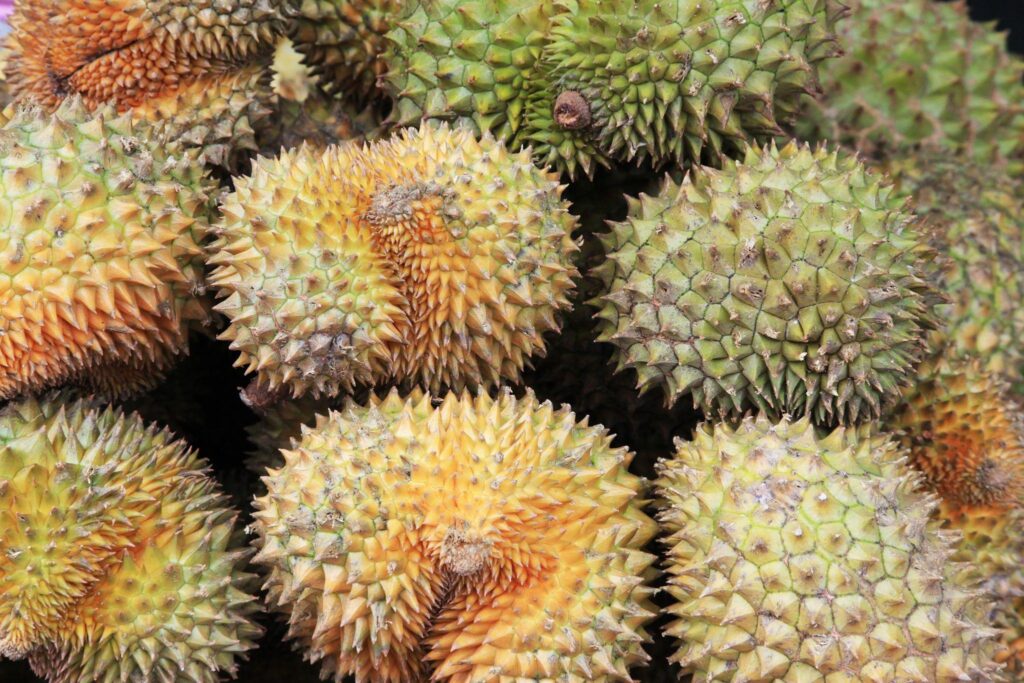
Durian black root disease, “Durian Canker,” and stem rot are difficult to cure once trees are heavily infected. Long-term protection focuses on prevention.
Improve Drainage
Since Phytophthora thrives in wet, poorly drained soils:
- Build and maintain drainage channels
- Avoid water stagnation
- Consider raised planting beds in flood-prone areas
- Inspect drainage before the rainy season
Reducing excess moisture is your first line of defense.
Strengthen Soil Health
Healthy soil supports beneficial microbes that naturally suppress pathogens.
- Apply compost regularly
- Maintain balanced nutrition
- Consider biological agents like Trichoderma
- Avoid excessive chemical dependence
Strong soil biology helps trees resist infection.
Practice Orchard Hygiene
- Remove infected plant parts immediately
- Disinfect tools between trees
- Avoid moving contaminated soil
Reducing pathogen load lowers infection pressure.
Use Resistant or Tolerant Planting Material
Select healthy nursery stock and disease-free seedlings. Resistant or tolerant varieties provide added protection for new plantings.
Monitor Early and Act Fast
Watch for:
- Yellowing leaves
- Slow growth
- Bark lesions
- Root softening
Early action can prevent widespread losses. Once roots collapse, recovery is unlikely.
Key Takeaway
Black root disease, “Durian Canker” in duria,n is a serious threat, especially in wet tropical environments. The most effective strategy combines good drainage, soil health, orchard hygiene, selective fungicide use, biological controls, and early monitoring.
There is no single “quick fix.” Long-term success depends on consistent, integrated management. Protecting your orchard today means protecting your harvest tomorrow.

