


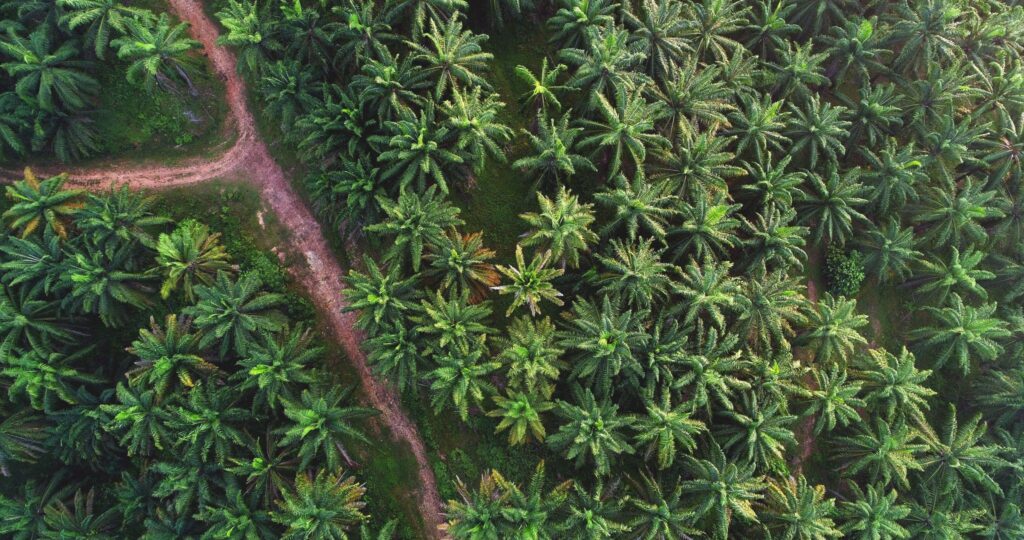
Since the 1970s, rats have been the biggest troublemakers, damaging oil palm plantations in Malaysia. These rats eat oil palm fruits, which contributes to measurable yield losses, especially in young palms.
An uncontrolled or heavily infested mature oil palm plantation can have about 100 to 600 rats in just one hectare. This explains why they can cause serious crop damage. In extreme scenarios where management is ineffective, these numbers can even reach up to 1,500 rats per hectare.
We have put together a thorough guide to detect, prevent, and control their numbers in your palm plantations.
Detection
Using GIS and Habitat Analysis to Detect Rat Hotspots
GIS (Geographic Information Systems) can discover where rats tend to live inside oil palm plantations. Mapping technology and satellite photos are used to create a “rat hotspot map” for oil palm plantations. The satellite image is extremely sharp (0.5-meter resolution), meaning it can detect small features like bushes, bare soil, and roads. Using this information, you can predict the probability of rats being present in certain areas.
Things like thick ground vegetation, available shelter, plantation layout and palm age all affect how many rats survive in an area. Rats were more likely to be found near plantation roads, which unintentionally increased rat movement, occurrence, and survival. This is because road edges often have vegetation cover, shelter, and clear pathways for movement.
Why Young Plantations Are Most Vulnerable?
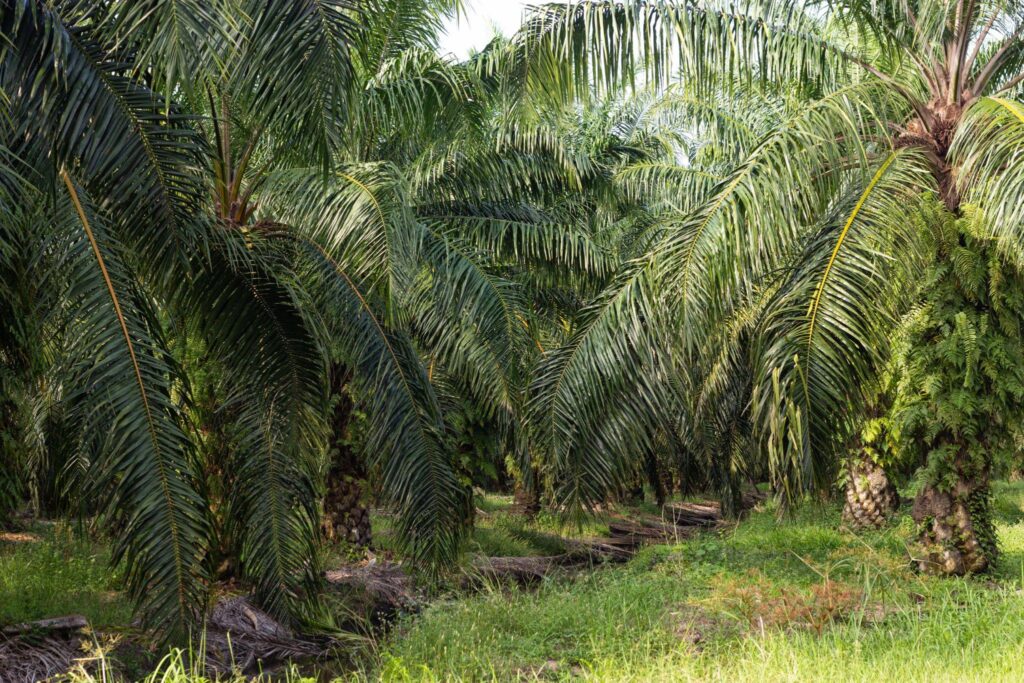
Rats are more commonly found in young oil palm areas (less than three years old) than in mature plantations because these areas have more open ground, bushes and weeds, partial shade, and less canopy cover, making it easier for rats to hide, move around, and find food.
High-Risk Zones Within the Plantation
However, the type of area within the plantation itself also plays an important role in determining rat numbers. Planted fields recorded the highest number of rats, while housing areas and riverbanks had lower populations. Rats tend to prefer specific small areas within plantations that provide better access to food, shelter, and protection.
Without a doubt, where the rats live inside the plantation really matters. Some areas naturally attract more rats than others. Once you know which habitats attract more rats, you can focus control efforts on hotspot areas, all while reducing unnecessary baiting and improving overall effectiveness.
Monitoring Rat Population Size
To see how many rats are in a plantation, use traps and the mark-and-recapture method to get a more accurate picture of population size. Rat numbers can change depending on the season and the availability of food in the area. Checking rat numbers before taking action helps you understand how bad the problem is and plan control efforts properly.
Which Rat Species Dominate Plantations?
The main rat species in some plantations changed over the years. Rattus tiomanicus became less dominant, and Rattus diardii has taken its place in certain areas. Knowing this matters because each species behaves differently, prefers different environments, and may not respond the same way to control methods.
Not all rats are the same. Knowing which species are present and whether there are many young rats helps farmers understand if the population is growing quickly and what kind of control method will work best. So, one control method may not work equally well for all rats.
Prevention
Understanding Population Growth and Seasonal Peaks
Rat populations go up and down depending on food availability, breeding seasons, and weather and environmental conditions. There are times of the year when rats naturally increase. If you know when these peaks happen, you can act early before rats cause serious damage.
Rats breed fast when food and shelter are easy to find. So when their population explodes, it can cause outbreaks. If young palms have too much vegetation or cover, it will accelerate rat breeding. When young rats join the population, infestations grow quickly.
Habitat Management and Vegetation Control
Plantation structure strongly affects how long rats stick around. Thick undergrowth and complex habitats make it easier for rats to hide and survive. Areas with dense bushes or cover are “rat safe zones,” so controlling vegetation can help reduce their growing numbers.
Instead of reacting after rats become a big problem, managing habitats, monitoring populations regularly, and combining different control methods are the key. When farmers understand how rats live and use that knowledge to control them sustainably, they rely less on poison.
Control
Chemical Control: Rodenticides and Baiting Strategy
Despite chemical rat poisons (rodenticides) still being commonly used, depending only on chemicals is not the best long-term solution. Instead, combining habitat analysis, strategic trapping, and ecological knowledge will make pest control more sustainable, reduce excessive chemical use, and be safer for the environment.
One key challenge is, rats don’t eat every bait equally. If you have pre-baiting (offering non-poisoned bait first) in place, it can make rats more likely to eat the actual poison later. But then again, poor bait formulation can make poison ineffective. So, taste, placement, and timing matter.
Biological Control: Barn Owls
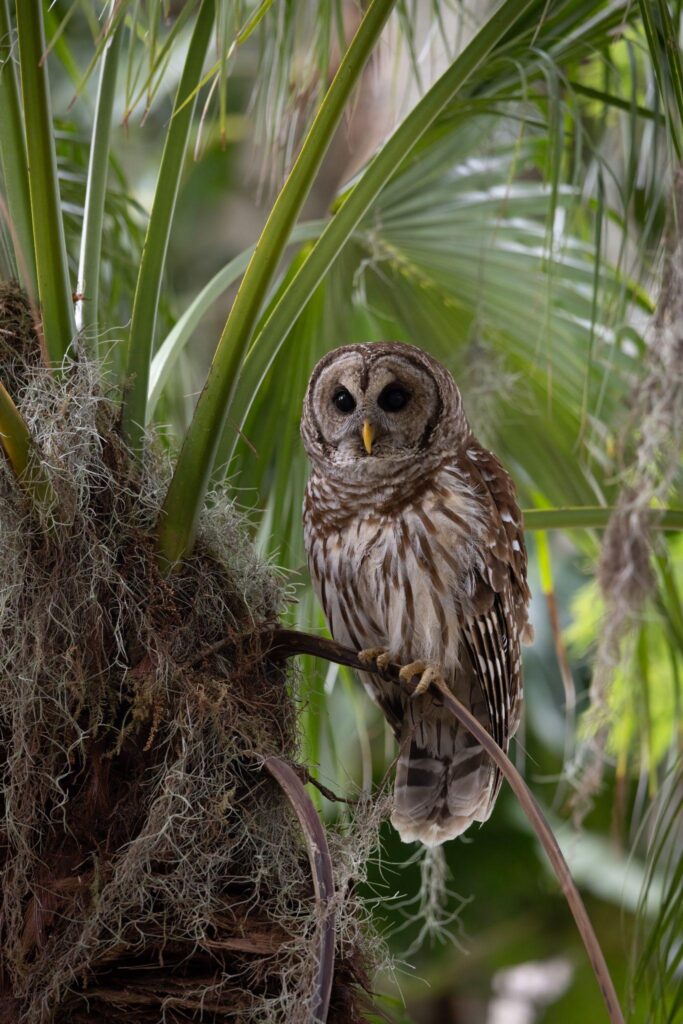
In order to reduce chemical dependency, barn owls are introduced as a natural pest control method. Some plantations install nesting boxes so that owls naturally hunt rats, helping to control their population without chemicals.
Mechanical Control: Hunting Trained Dogs
In areas with lots of rats, trained hunting dogs is a natural method to control rat numbers for fewer risks of environmental contamination in the oil palm plantation.
Unlike baiting that takes days to work, hunting dogs can show immediate results by catching rats right away. This is an ideal solution for reactive situations where rat numbers suddenly spike, especially in young palm plantations, zones with tall or thick ground vegetation, or hidden spots where it’s hard to place bait.
Once rat hotspots are mapped, dogs can be sent to those areas for targeted control. Rather than treating the entire plantation, this works best as an environmentally friendly tool alongside other main methods.
Key Takeaway
With populations fluctuating seasonally and varying by species, rats are a major pest for oil palm plantations. Monitoring, species identification, and habitat assessment are essential before implementing prevention measures. The key is to use integrated strategies that combine chemical, biological, and mechanical control to provide more effective solutions for protecting your yields.
References
- Asrif, Nur Athirah & Hafidzi, Mohd & Burhanuddin, Maisarah & Azhar, Badrul. (2025). Habitat requirement analyses can guide pest rodent management in oil palm plantations: Evidence from Sabah, Malaysia. Crop Protection. 198. 107372. 10.1016/j.cropro.2025.107372.
- Chia, Tio. (2005). Rat Control in Oil Palm Plantations : A Review. The Planter. 81. 10.56333/tp.2005.001.
- Noh, A. A. M. (2022). Efficacy of rodenticides in controlling major rat species of oil palm, Rattus tiomanicus (Miller) in Sungkai, Perak (Master’s thesis, Universiti Sains Malaysia). https://eprints.usm.my/59243/
- Phua, Mui-How & Chong, C. & Ahmad, Abdul & M.N., Hafidzi. (2018). Understanding rat occurrences in oil palm plantation using high-resolution satellite image and GIS data. Precision Agriculture. 19. 10.1007/s11119-016-9496-z.
- Saravanan, K., Idrus, M. A., & Prakash, A. (2020). Control of rat damage in oil palm plantation using local hunting dogs – IOI Kahang Estate’s experience. The Planter, 96(1132), 479–485.
- Thongjua, T., & Thongjua, J. (2016). Efficiency of material types of box fences to prevent rat damage in oil palm plantations. International Journal of Agricultural Technology, 12(7.1), 1491–1498.
- Wood, B. J., & Liau, S. S. (2003). A critical review of the development of rat control in Malaysian agriculture since the 1960s. Crop Protection, 22(3), 445–461. https://doi.org/10.1016/S0261-2194(02)00207-7

