


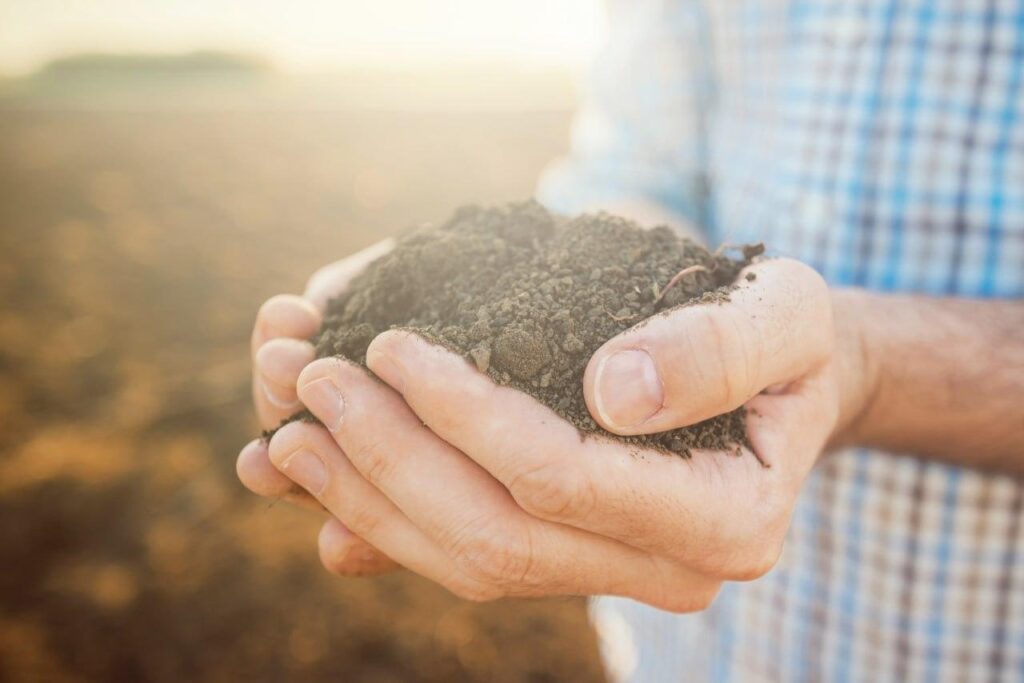
Many farmers apply fertilizers but still see poor crop response. One major reason is the loss of nutrients from the soil before plants can absorb them. Soil organic matter plays a key role in preventing this problem by improving how soil stores and retains nutrients.
Soil organic matter (SOM) is one of the most important components of healthy soil, especially in tropical farming systems where nutrients are easily lost due to heavy rainfall and intensive farming. It is made up of decomposed plant and animal materials that improve soil fertility over time.
In farming, increasing SOM is one of the most effective ways to improve long-term soil health and reduce fertilizer losses. Read on to find out why many farms lose nutrients after fertilization and how soil organic matter can help solve this issue.
How It Improves Nutrient Retention
1. Acts Like a Nutrient “Storage System”
Organic matter contains many negatively charged sites that hold important nutrients, like calcium, potassium, magnesium, and nitrogen. Known as cation exchange capacity (CEC), it allows soil to store nutrients and release them when plants need them. Higher SOM increases CEC, helping reduce nutrient losses through leaching, especially after heavy rainfall or irrigation.
Simply put, having more organic matter in your soil helps keep nutrients in place.
2. Prevents Nutrient Leaching
In sandy or low-organic soils, nutrients can wash away quickly, making them hard for plants to access. SOM is essential because it helps retain these nutrients by:
- binding them in the soil
- improving the soil structure for better root growth
- increasing the soil’s ability to hold water
This is especially crucial for nitrogen, which can be easily lost in many farming practices. Keeping SOM high ensures that your crops have the nutrients they need to thrive.
3. Releases Nutrients Slowly Through Decomposition
Beneficial soil microbes help break down organic matter, gradually releasing nutrients that plants can readily absorb. This natural process acts like a slow-release natural fertilizer, offering several benefits for farmers:
- A more stable nutrient supply for crops
- Reduced the need for frequent fertilizer applications
- Lower risk of nutrient spikes and potential losses
It helps maintain a steady nutrient supply throughout the growing season, reducing reliance on frequent fertilizer applications.
4. Improves Soil Structure for Better Root Access
Healthy SOM is vital for building stable soil aggregates, creating a crumb-like structure. This structure leads to improved root penetration, better water infiltration, and increased air movement in the soil. In turn, stronger root systems allow plants to access nutrients more effectively, improving overall crop growth and yield stability. Better soil structure also helps soil hold more moisture during dry periods.
5. Supports Beneficial Soil Microbes
SOM feeds microbial life, and these microbes play several key roles in the soil ecosystem. They convert nutrients into forms that plants can readily absorb, help fix nitrogen in some systems, suppress harmful pathogens that can damage crops, and improve the overall efficiency of nutrient cycling. This leads to healthier soil conditions and improves how efficiently crops use available nutrients.
Practical Ways to Improve Soil Organic Matter
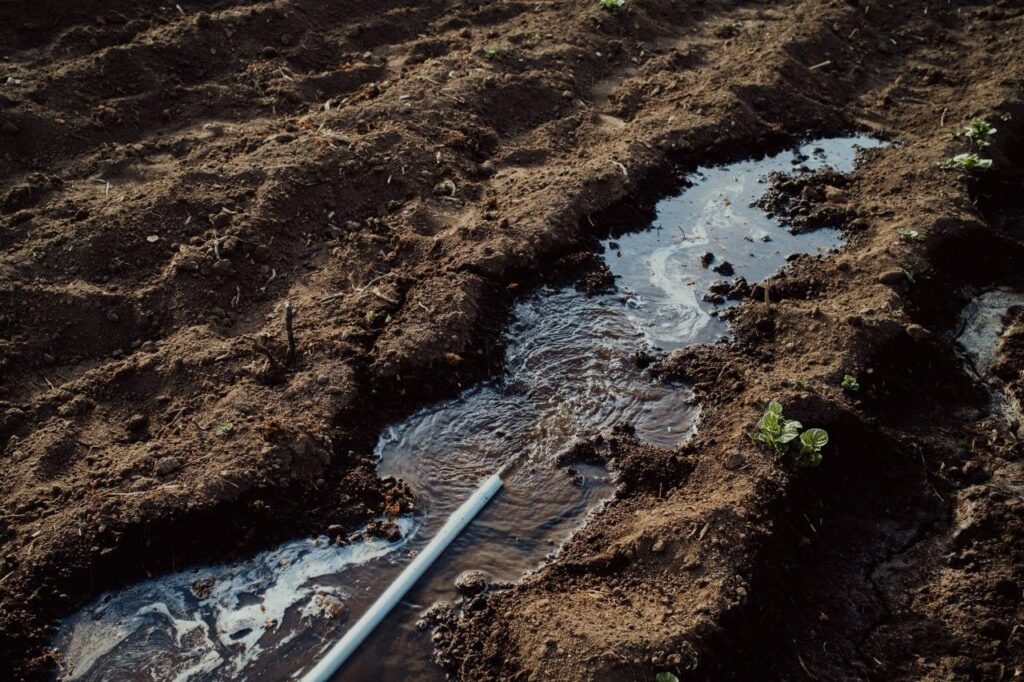
High impact practices:
- Keep crop residues on the field
- Apply compost or manure
Medium-term practices:
- Cover crops
- Crop rotation
- Reduced tillage
These practices help rebuild soil fertility over time and reduce dependence on chemical fertilizers. Building SOM is a gradual process that typically takes multiple planting seasons to show significant improvement.
Why This Matters for Farmers
For farmers, improving soil organic matter means better fertilizer efficiency, reduced nutrient losses, and more stable yields across seasons. It also helps reduce dependency on chemical inputs over time, improving long-term profitability and soil sustainability, especially under changing weather conditions. However, improving SOM does not replace fertilizers, but helps crops use applied fertilizers more efficiently. This means farmers get more value from every unit of fertilizer applied.
Farmers looking to further improve soil health and nutrient efficiency can explore more integrated approaches through Advansia’s agricultural solutions.
Key Takeaway
Soil organic matter is essentially the foundation of nutrient efficiency in agriculture, and increasing it leads to multiple benefits for soil and crop performance. It improves nutrient retention by reducing losses from leaching, enhances fertilizer effectiveness by making applied nutrients more available to plants over time, and strengthens soil structure by promoting better aggregation and aeration.
Over the long term, these changes contribute to improved soil health and sustained farm productivity. The benefits of SOM are especially important in sandy soils, where nutrient loss is more severe. However, building soil organic matter requires consistent management and cannot be improved instantly.
References
- Blanco-Canqui, H., & Lal, R. (2009). Crop residue removal impacts on soil productivity and environmental quality. Critical Reviews in Plant Sciences, 28(3), 139–163. https://www.tandfonline.com/doi/full/10.1080/07352680902776507
- Bünemann, E. K., Bongiorno, G., Bai, Z., et al. (2018). Soil quality—A critical review. Soil Biology and Biochemistry, 120, 105–125. http://sciencedirect.com/science/article/pii/S0038071718300294?via%3Dihub
- Diacono, M., & Montemurro, F. (2010). Long-term effects of organic amendments on soil fertility. Agronomy for Sustainable Development, 30(2), 401–422.
https://link.springer.com/article/10.1051/agro/2009040 - Helling, C. S., Chesters, G., & Corey, R. B. (1964). Contribution of organic matter and clay to soil cation-exchange capacity as affected by the pH of the saturating solution. Soil Science Society of America Proceedings, 28(4), 517–520. https://acsess.onlinelibrary.wiley.com/doi/10.2136/sssaj1964.03615995002800040020x
- Oades, J. M. (1988). The retention of organic matter in soils. Biogeochemistry, 5(1), 35–70. https://link.springer.com/article/10.1007/BF02180317
- Poeplau, C., & Don, A. (2015). Carbon sequestration in agricultural soils via cultivation of cover crops—A meta-analysis. Agriculture, Ecosystems & Environment, 200, 33–41. https://www.sciencedirect.com/science/article/abs/pii/S0167880914004873?via%3Dihub
- Six, J., Conant, R. T., Paul, E. A., & Paustian, K. (2002). Stabilization mechanisms of soil organic matter: Implications for C-saturation of soils. Plant and Soil, 241, 155–176. https://link.springer.com/article/10.1023/A:1016125726789
- van der Heijden, M. G. A., Bardgett, R. D., & van Straalen, N. M. (2008). The unseen majority: Soil microbes as drivers of plant diversity and productivity in terrestrial ecosystems. Ecology Letters, 11(3), 296–310. https://onlinelibrary.wiley.com/doi/epdf/10.1111/j.1461-0248.2007.01139.x

