


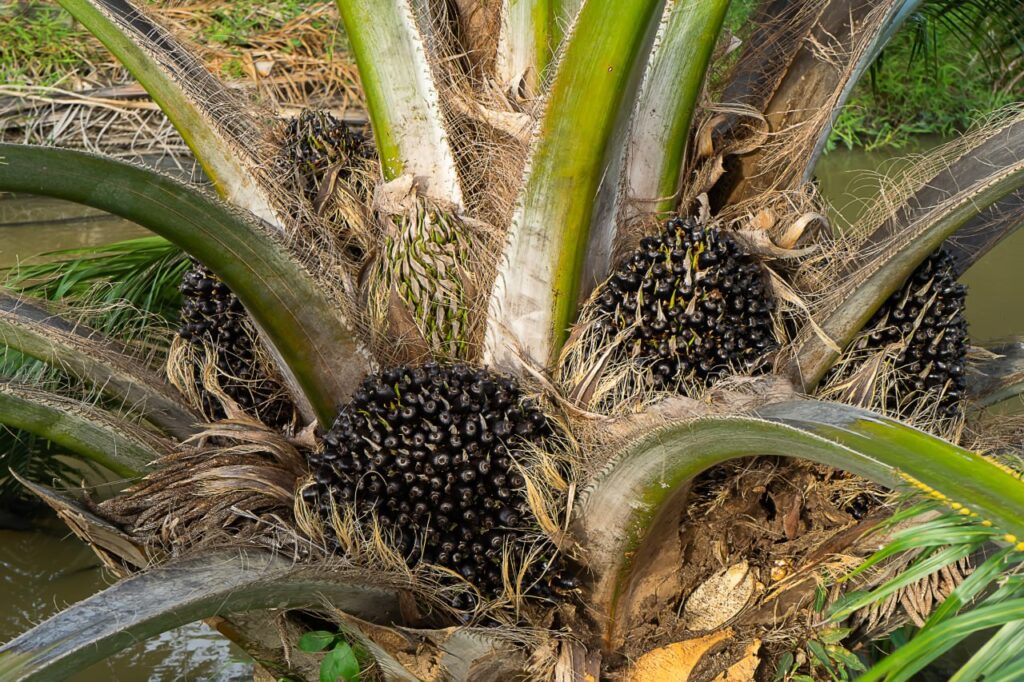
Oil palm farming in Malaysia is often affected by fungal diseases that can reduce yield and shorten the life of the plantation. The most common problems are Basal Stem Rot (BSR), bud rot, and nursery-stage infections. These diseases usually do not appear suddenly but develop slowly over time due to soil conditions, poor drainage, replanting practices, and general field management.
Read more to explore the top 5 fungal diseases in oil palm and proven control strategies for Malaysian plantations.
Disease Impact Ranking in Malaysian Oil Palm
- Critical: Basal Stem Rot (BSR)
- Moderate: Bud Rot, Upper Stem Rot
- Nursery-level: Anthracnose, Curvularia leaf spot
1. Basal Stem Rot (BSR)
Why Is It Severe in Malaysia?
The warm (27–32°C) and humid climate creates ideal conditions for growth, particularly during second-cycle planting, when old estates are being replanted. This issue is especially common in peat soils found in Sarawak and in the coastal clay soils of Peninsular Malaysia.
Economic Impact of Basal Stem Rot in Malaysia
Early palm death reduces productive yield lifespan, increases replanting costs in infected areas, and causes major losses in second-cycle plantations.
Higher Risk During Replanting Cycles
Second-cycle plantations have higher infection rates because old infected roots remain in the soil, and improper replanting increases disease persistence.
Local Risk Factors
As farmers, it’s important to be aware of certain local risk factors that can lead to issues in your crops. These include leaving infected stumps when replanting, having poor drainage—particularly in peat areas—and planting densely, which can limit airflow.
Control Strategies
- Zero-burning replanting and sanitation: Completely remove all old, infected trunks and roots.
- Ganoderma mapping and census: Conduct regular disease mapping, which is standard practice in Malaysian estates.
- Biological control: Apply Trichoderma in planting holes and mulching zones.
- Soil mounding (common practice): This technique improves aeration and reduces the spread of fungi.
- Use of tolerant clones: This practice is widely adopted by companies such as Sime Darby Plantation.
2. Upper Stem Rot (USR)
This condition is less common than Basal Stem Rot (BSR), but it’s becoming more frequent in plantations older than 15 years. It’s often associated with mechanical injuries, such as those caused by harvesting damage and pruning wounds. Farmers should be aware of this increasing risk as they manage their mature crops.
Why Is Chemical Control Alone Limited
Internal trunk infection is difficult to reach, fungicides cannot reverse tissue decay, and therefore, prevention is more effective than treatment.
Control Strategies
The most effective ways to control palm health include avoiding trunk injury during harvesting, promptly removing infected palms, and maintaining balanced fertilization to reduce stress.
3. Bud Rot (Spear Rot)
Why Does This Matter Most for Farmers in Malaysia?
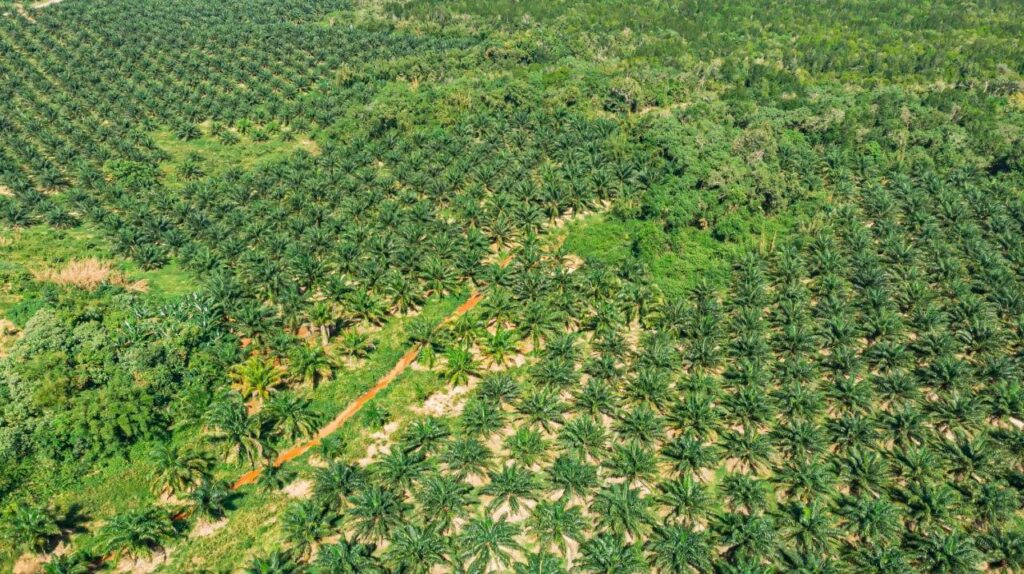
During prolonged rainy seasons or monsoon periods, there is a significant risk in low-lying estates with poor drainage. This is especially true for flood-prone plantations in regions like Johor, Pahang, and Sarawak.
Why Are Fungicides Alone Not Sufficient
Infection spreads rapidly during wet conditions, waterlogged soil reduces treatment effectiveness, and therefore drainage is more important than chemical control.
Control Strategies
Drainage is crucial for your fields, and regular maintenance of field drains is a key practice in Malaysian estates. To promote healthy growth, ensure that water does not stagnate for more than 48 hours, avoid mechanical damage to the spear, and apply fungicides as needed in nurseries and young fields to protect crops.
4. Anthracnose (Nursery Disease)
In Malaysia, anthracnose is very common in nurseries due to high humidity and frequent rain, especially in shade houses with poor ventilation.
Early Detection Symptoms
Symptoms include small brown lesions on leaves, leaf tip necrosis, and seedling stunting.
Control Strategies
To effectively manage plant health in accordance with Nursery SOPs in Malaysia, farmers should take the following steps:
- Use Raised Seedbeds: This helps reduce the risk of splash-borne infections.
- Improve Spacing Between Polybags: Proper spacing allows for better air circulation and promotes healthy plant growth.
- Schedule Fungicide Applications: Regularly apply fungicides, such as copper- or mancozeb-based products, to protect plants.
- Avoid Overhead Watering Late in the Day: This practice helps prevent fungal infections by allowing plants to dry before nightfall.
5. Curvularia Leaf Spot (Nursery Stage)
Curvularia leaf spot is common during the wet months (November–January monsoon) and is often linked to nutrient stress, particularly low potassium.
Early Detection Symptoms
Symptoms include brown leaf spots with yellow halos, leaf drying at the nursery stage, and patchy seedling growth.
Control Strategies
Control can be achieved by maintaining balanced fertilization (NPK + Mg), improving airflow in the nursery, removing infected seedlings early, and applying fungicides only when the outbreak is severe.
Regional Risk Breakdown in Malaysia
- Sarawak: peat soils with the highest BSR risk
- Johor and Pahang: flood-prone areas with higher bud rot risk
- Coastal Peninsular Malaysia: commonly faces drainage issues
Key Malaysian Environmental Factors to Manage
Why This Matters
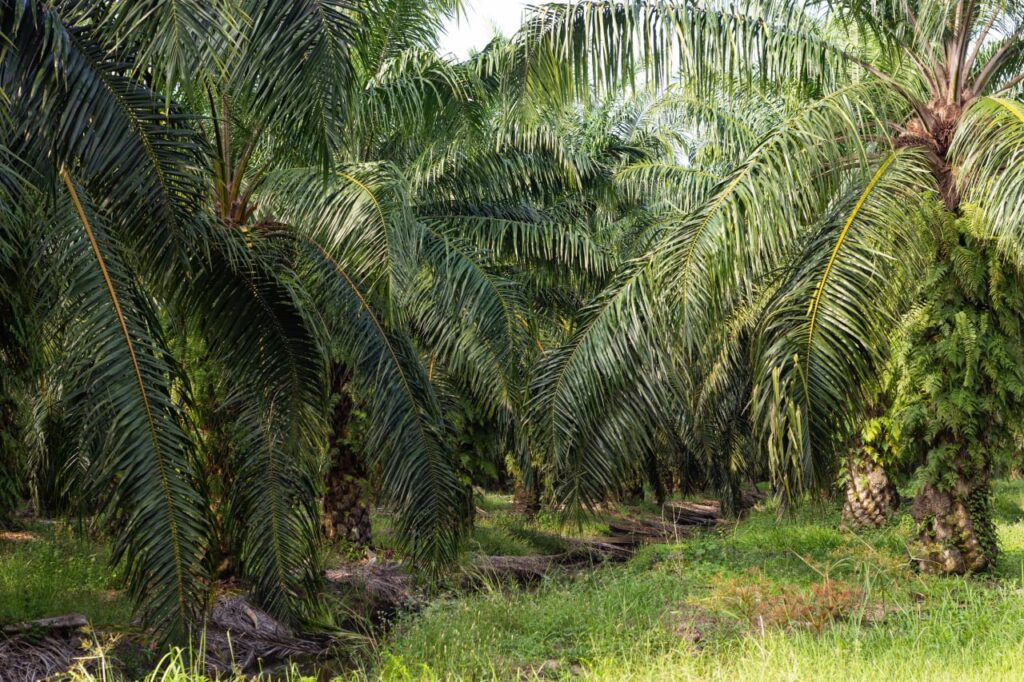
Environmental conditions directly affect fungal spore survival, influence the speed of disease spread, and determine the effectiveness of control strategies.
Rainfall (2,000–3,000 mm/year)
It drives fungal spread, so the solution is to implement strong drainage systems, especially in peat soils.
High Humidity (>80%)
As it encourages spore germination, proper spacing, pruning, and canopy management should be implemented.
Soil Type Challenges
- Peat soils (in Sarawak) have a high risk of BSR, so they require mounding and proper drainage.
- Clay soils are prone to poor drainage, making them more susceptible to bud rot.
Integrated Pest and Disease Management (IPDM) in Malaysian Oil Palm
What Top Malaysian Estates Actually Do
Before Planting
Infected biomass should be removed, biological control agents such as Trichoderma should be applied, and certified disease-tolerant seedlings should be used.
During Planting
Proper hole treatment using biofungicides should be carried out, and effective drainage systems should be installed, which is especially important in Malaysia.
Mature Phase
Quarterly disease censuses should be conducted as standard practice, GPS/GIS mapping should be used to track BSR spread, and infected palms should be removed immediately once infection is confirmed.
Nursery Management
Strict hygiene protocols should be enforced, irrigation systems should be properly controlled, and fungicides should be rotated routinely.
Why Integrated Management Is Essential
No single control method is fully effective, so a combination of sanitation, monitoring, and biological control is required, as chemical control alone cannot eliminate soil-borne pathogens.
Key Takeaway
The practical reality is that BSR (Ganoderma) is the number one yield killer, accounting for major losses nationwide. However, chemical control alone is not effective in the long term, as success depends on discipline in sanitation and monitoring, not just input application.
Sustaining plantation health requires consistent field execution, early detection, and an integrated approach combining sanitation, monitoring, and biological control across all growth stages.
At Advansia, we provide structured agronomic support to help growers and estates strengthen integrated disease management practices. Learn more about how we can support your plantation.
References
- Agrios, G. N. (2005). Plant pathology (5th ed.). Elsevier. https://www.sciencedirect.com/book/monograph/9780120445653/plant-pathology
- Bharudin, I., et al. (2022). Review on Ganoderma boninense in oil palm. https://www.mdpi.com/2079-7737/11/2/251
- Corley, R. H. V., & Tinker, P. B. (2016). The oil palm (5th ed.). Wiley-Blackwell. https://onlinelibrary.wiley.com/doi/book/10.1002/9781118953297
- Erwin, D. C., & Ribeiro, O. K. (1996). Phytophthora diseases worldwide. American Phytopathological Society Press. https://bsppjournals.onlinelibrary.wiley.com/doi/full/10.1046/j.1365-3059.1998.0179a.x
- Fishal, E. M. M., et al. (2022). Trichoderma spp. against Ganoderma boninense. https://www.scirp.org/journal/paperinformation?paperid=118934&
- Flood, J., Bridge, P. D., & Holderness, M. (Eds.). (2000). Ganoderma diseases of perennial crops. CABI Publishing. https://www.cabidigitallibrary.org/doi/book/10.1079/9780851993881.0000
- Khoo, Y. W., & Chong, K. P. (2023). Ganoderma boninense: control and pathogenicity. https://pmc.ncbi.nlm.nih.gov/articles/PMC10363743/
- Malaysian Palm Oil Board. (various years). Journal of Oil Palm Research. http://jopr.mpob.gov.my/in-planta-efficacy-of-local-trichoderma-isolates-and-selected-commercial-biological-agents-against-ganoderma-boninense-in-oil-palm/

