


What is the Rhinoceros Beetle?
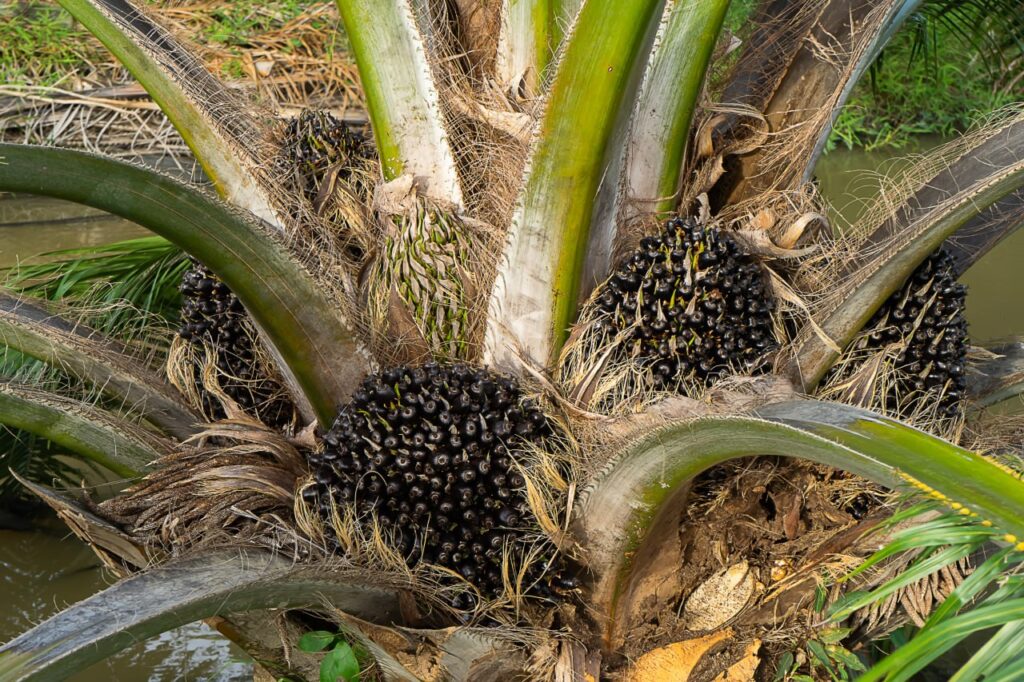
One of the most harmful pests of young oil palms in Southeast Asia, especially in Malaysia, is Oryctes rhinoceros. Damage is most severe during the early establishment stage, when the pest attacks young palms, causing major yield losses if not controlled early. The adult beetle causes damage by boring into the top (crown) of the palm to feed, which can slow growth and even kill the palm. Modern plantation practices, such as zero-burning replanting, can create breeding sites in decomposing material, indirectly increasing the risk of rhinoceros beetle infestations.
Why Young Oil Palm is Easily Attacked
The soft, developing tissues in young palms make them an easy target compared to mature palms. Damage at this early stage can lead to delayed growth, reduced yield, and even palm death. Adult beetles attack the unopened spear and crown, exploiting the early-stage oil palm vulnerability.
How to Identify Rhinoceros Beetle Damage
Early signs
Small holes at the top of the palm and chewed fibres, resembling sawdust, near the holes.
Clear signs
Leaves showing V-shaped cuts when they open, as well as a damaged or unopened spear (young leaf).
Severe damage
Palm may appear stunted or unhealthy, the crown may rot, and the palm may eventually die.
What Causes the Problem?
Its breeding places make the beetle a major problem. Old palm material, such as rotting trunks after replanting and dead logs, as well as organic waste like empty fruit bunches (EFB) and piles of plant debris, are the main causes. As the beetle lays its eggs in rotting material, more waste leads to more beetles. In short, a dirty field results in more beetles.
How to Prevent Rhinoceros Beetles
Keep the Field Clean
To keep the field clean, farmers should remove or break down old trunks, avoid piling up organic waste, and manage empty fruit bunches properly. The goal is to remove breeding places.
Manage Oil Palm Residues
Farmers should not leave large piles of rotting material; instead, they should spread or treat residues properly.
Check Your Palms Regularly
Farmers should inspect young palms often and look for early signs of attack. A simple idea to remember is that early detection saves the palm.
How to Control Rhinoceros Beetles
Virus (OrNV)
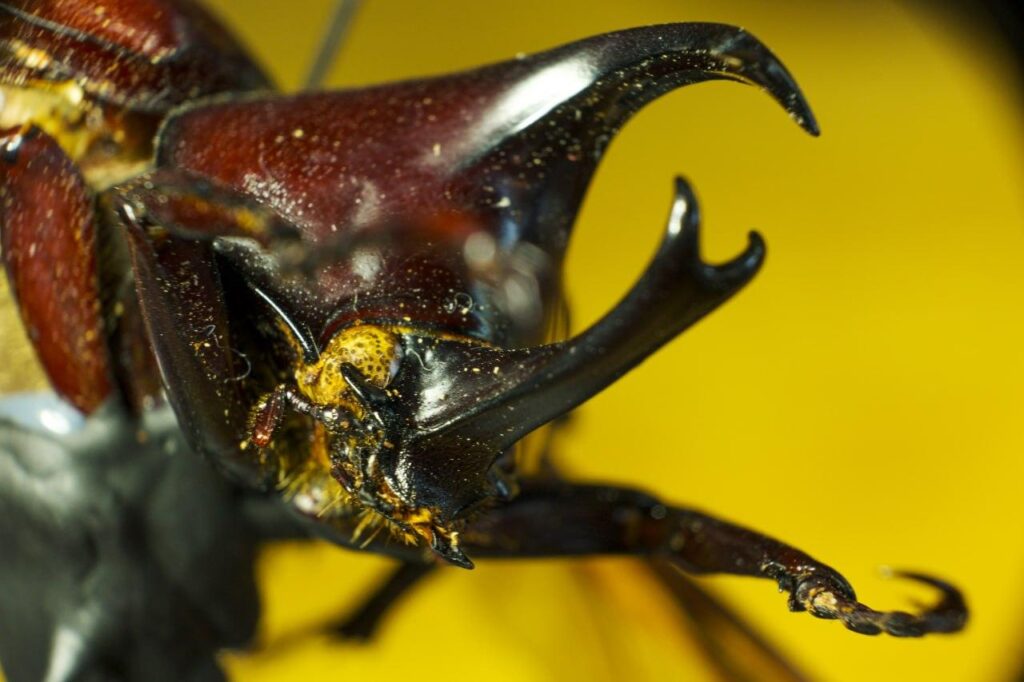
The virus (OrNV) infects and kills beetles and can spread naturally between them. This is beneficial because it is safe for the environment and provides long-term control.
Fungus
The fungus (Metarhizium anisopliae) attacks beetle larvae in breeding sites. It is used in rotting trunks and organic waste.
Pheromone Traps
Special traps that use a chemical lure (pheromone) attract adult beetles and capture them, helping to reduce the beetle population. A simple idea to remember is: “Trap the adults before they attack.”
These methods are most effective when combined as part of an integrated pest management (IPM) approach, which is commonly used in modern oil palm plantations.
Key Takeaways
Rhinoceros beetles are a serious threat to young oil palm plantations, especially during the early growth stage. The pest damages the growing point of the palm, which can slow growth, reduce yield, or even cause the palm to die.
Effective management depends on three main actions: keeping the plantation clean to remove breeding sites, regularly monitoring young palms for early signs of damage, and using integrated control methods such as biological control and pheromone trapping.
In many plantations, these practices are supported by structured monitoring and pest management systems to improve control effectiveness, and professional guidance can help ensure that prevention and control measures are applied at the right time.
References
- Ahmad, A. H. (2006). Final report on control of rhinoceros beetle (Oryctes rhinoceros) in a zero-burning replanted oil palm area (FELDA Plantation). Universiti Sains Malaysia. http://eprints.usm.my/1488/1/Final_Report_On_Control_Of_Rhinoceros_Beetle_(Oryctes_Rhinoceros)_In_A_Zero_
Burning_Replanted_Oil_Plam_Area_Felda_Plantation.pdf - Malaysian Palm Oil Board. (n.d.). Advances in the control of rhinoceros beetle (Oryctes rhinoceros) in oil palm: A review. https://jopr.mpob.gov.my/advances-in-the-control-of-rhinoceros-beetle-oryctes-rhinoceros-in-oil-palm-review-article/
- Mat Ripin, M. A. F., & Md. Latip, S. N. H. (2021). Oryctes rhinoceros infestation and its interaction with oil palm damage in selected oil palm plantation. International Transaction Journal of Engineering, Management, & Applied Sciences & Technologies, 12(9). https://tuengr.com/V12/12A9S.pdf
- Meor Badli Shah Ahmad Rafie, & Samsudin Amit. (2024). Susceptibility of Oryctes rhinoceros beetle to trunk-injected acephate and trunk-implanted acephate controlled-release insecticide on tall palms via petiole bioassay. In Special Issue: 5th International Symposium on Insects (ISOI2023), “Unveiling the hidden prospect of insects” (Serangga, 29(2), 200–209). https://doi.org/10.17576/serangga-2024-2902-15
- Sulaiman, S., Wahid, M. B., & others. (n.d.). Oryctes rhinoceros beetles: An oil palm pest in Malaysia. https://www.researchgate.net/publication/263163270_Oryctes_rhinoceros_Beetles_an_Oil_Palm_Pest_in_Malaysia

