


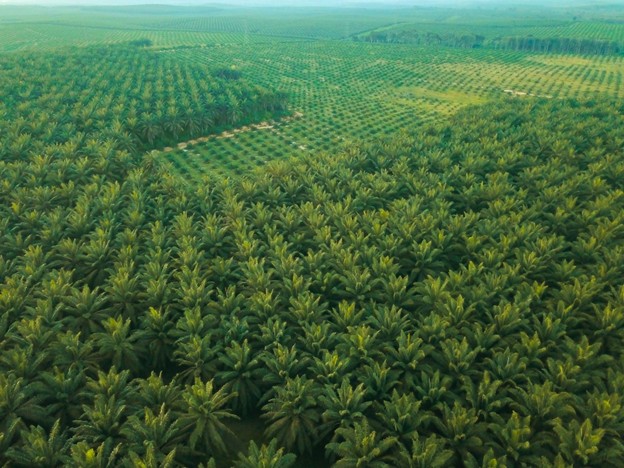
Malaysia, the world’s second-largest producer of palm oil after Indonesia, earns billions of Ringgit annually from this industry. Small mistakes in cultivation or processing can significantly affect farmers’ income. Even experienced oil palm farmers can make mistakes managing a plantation.
The key question is: how late is too late to correct these mistakes and boost yields? It is also important to consider the types of mistakes that happen. The earlier you address an issue, the better the outcome. So, how can you increase oil palm yield if you have made these seven common plantation mistakes, and how do you fix them?
1. Inadequate Pest and Disease Management
Pest and disease control is crucial in plantation farming. When not properly managed, pests such as insects and rodents, as well as diseases caused by fungi or bacteria, can spread quickly and damage oil palm trees. This leads to poor growth, reduced yields, and, in severe cases, the loss of entire stands. This is serious because once pests or diseases spread, they become more difficult and costly to control.
How to fix: Regular monitoring and early detection, combined with proper biological control, good field hygiene, and correct pesticide use, are essential to prevent and manage pest and disease outbreaks effectively.
2. Poor Water Management
As with all living things, crops need the right balance of water. Oil palms don’t like “too much water” sitting around their roots. If the soil stays soggy, roots can rot, the palm can’t absorb nutrients properly, and the plant becomes stressed, which leads to fewer fruit bunches and smaller yields. But if the soil dries out too much, palms can also suffer because they don’t have enough water to grow and produce fruit.
How to fix: Oil palms need just the right amount of water — not too much, not too little. Water management is key to keeping them healthy and productive.
3. Improper Planting Density
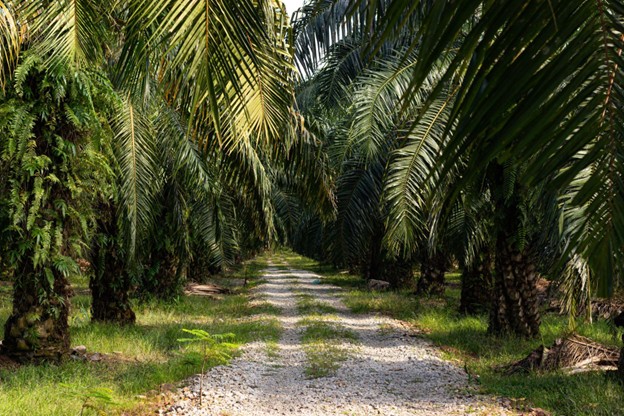
When planting palms, being too close together or too far apart matters more than you may think. If the planting is too dense, the palms shade each other and compete for light, nutrients, and water. As a result, they grow more slowly and produce fewer fruits. On the other hand, if the palms are planted too far apart with large empty gaps, the land is not used efficiently. This means a lower total yield per hectare because there are fewer palms, even if they are healthy.
How to fix: Follow the recommended spacing so each palm has enough room to grow and produce well.
4. Poor Fertilization Management
It goes without saying, among the farmers, that highly weathered Malaysian tropical soils can lose nutrients over time. This means the palms won’t get enough essential nutrients unless fertilizer is applied. But the mistake could happen when the soil isn’t tested. You might give too little fertilizer, so the palms don’t get enough food, or you might give too much, which can harm the soil.
How to fix: The best way to start is by doing soil and leaf tests before applying fertilisers. This tells you which nutrients are missing and how much fertilizer the field really needs.
5. Lack of Weed Control
You can never completely run away from weeds, the unwanted plants that grow around your oil palms. When left unchecked, they compete with palms for water, sunlight, and nutrients from the soil. This weakens the palms, stresses them out, slows growth, and reduces fruit production. Mistakes also happen if weed control is done poorly. Using the same herbicide repeatedly can create herbicide-resistant weeds that no longer die when sprayed and can make palms more vulnerable to pests.
How to fix: Keep the area around each palm clear (about 1–2 meters). Use approved herbicides and mulching if needed to suppress weeds.
6. Incorrect Pruning
Instead of asking what to remove, focus on what still brings the palm energy and growth. Unrealized mistakes, like removing too many fronds (leaves), reduce the palm’s ability to capture sunlight. With less leaf surface, the palm has less energy to make fruits, so the yield goes down. Cutting too many fronds also stresses the palm and disrupts its growth cycle, because the palm spends energy regrowing leaves instead of producing fruit.
How to fix: The key is to remove only old or excess fronds while keeping enough green leaves so photosynthesis is not interrupted. Proper pruning keeps palms healthy, strong, and productive.
7. Poor Harvesting Practices
Harvesting too early or too late affects not just the amount of fruit but also the oil extraction rate, which determines how much oil you get from the fruit. This mistake often occurs because workers are insufficiently trained, and harvesting practices are inefficient. As a result, ripe fruits may be missed or handled poorly, which limits productivity. The problem usually starts with the incorrect sorting of fruits by ripeness and quality, leading to further losses.
How to fix: Proper training, careful handling, and correct fruit sorting can help maximize yield and maintain healthy palms.
Key Takeaway
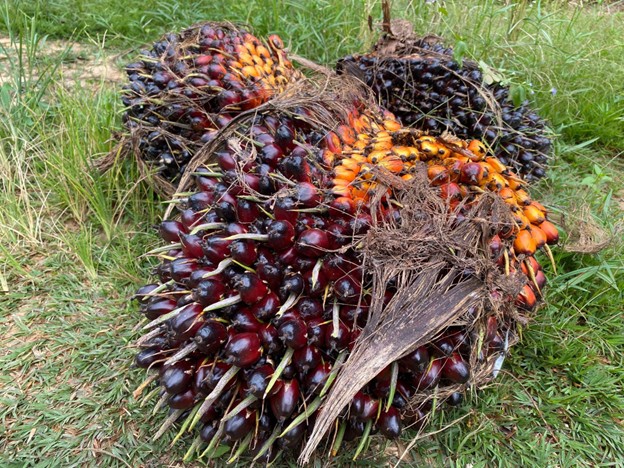
From poor site selection to incorrect fertilization and improper harvesting techniques, all these mistakes are salvageable rather than irreversible. There is no better time than now to start correcting them and see real improvements.
By addressing these mistakes, farmers can maximize productivity and improve profitability. They can also maintain sustainable oil palm production for themselves and future generations.
If production in 2025 reached a record of over 20 million tonnes for the first time, then with the right approaches, 2026 can continue to deliver strong yields for one of Malaysia’s top export products and the world’s most productive oil crop.
References
- Babalola, S. E., Ahmad-Hamdani, M. S., & Zakaria, N. (2025). Herbicide resistance in Malaysian oil palm plantations: A comprehensive review of current challenges and management strategies. Pertanika Journal of Tropical Agricultural Science, 48(5), 1565–1589. https://doi.org/10.47836/pjtas.48.5.13
- Malaysian Palm Oil Board. (2010). Efficient use of inorganic and organic fertilisers for oil palm (Oil Palm Bulletin No. 71). MPOB.
- Mat Su, A. S., & Tan, S. Q. (2019). A review of fertilization assessment methods in oil palm plantation. In Proceedings of the National Convention on Agricultural and Food Engineering (pp. 27–31). Malaysian Society of Agricultural Engineers. https://elibrary.msae.my/wp-content/uploads/journal/published_paper/volume-2/issue-1/5gBwh2gq.pdf
- Nilnond, C., Juntaraniyom, T., Tongkum, P., Leowarin, W., & Eksomtramage, T. (2001). Effect of fertilizer application on yield of oil palm. Songklanakarin Journal of Science and Technology, 23.
- Samian, M. R., & Rizal, A. M. (2024). Improving palm oil productivity through harvesting practices. International Journal of Academic Research in Business and Social Sciences, 14(10), 2276–2284. http://dx.doi.org/10.46886/IJAREG/v14-i10/12592
- Sarpong, O. A., et al. (2020). Closing yield gaps in oil palm production systems through best management practices. Global Food Security. Elsevier.
- Soh, A. C. (2004). Selecting the ideal oil palm: What you see is not necessarily what you get!. Journal of Oil Palm Research, 16(2), 121–128. Malaysian Palm Oil Board.
- Sowat, S. N., Wan Ismail, W. I., Bejo, S. K., & Mohd Kassim, M. S. (2023). Trend in the development of oil palm fruit harvesting technologies in Malaysia. Jurnal Teknologi (Sciences & Engineering). https://doi.org/10.11113/jt.v80.11298
- Veloo, R. (2018). Managing for high oil palm yields (MOSTA presentation). Malaysian Oil Scientists’ & Technologists’ Association (MOSTA).

