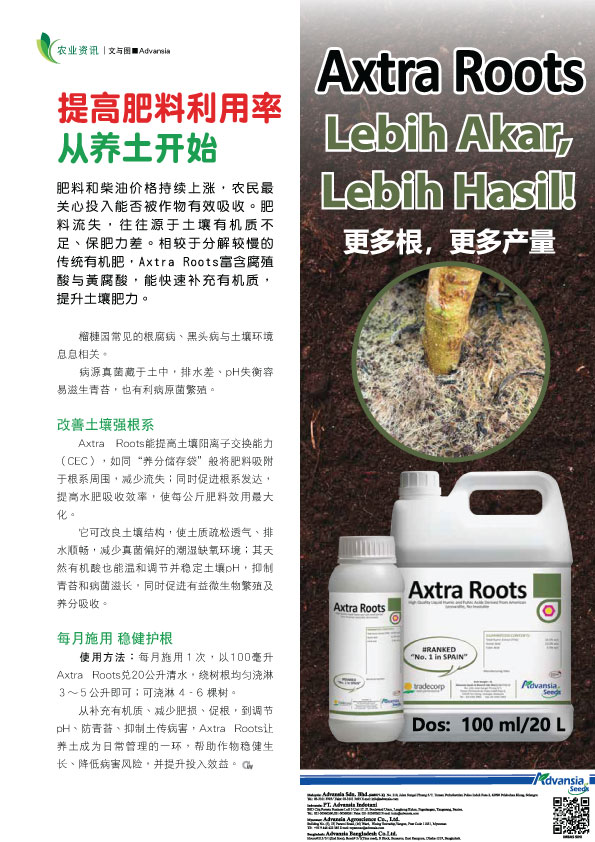
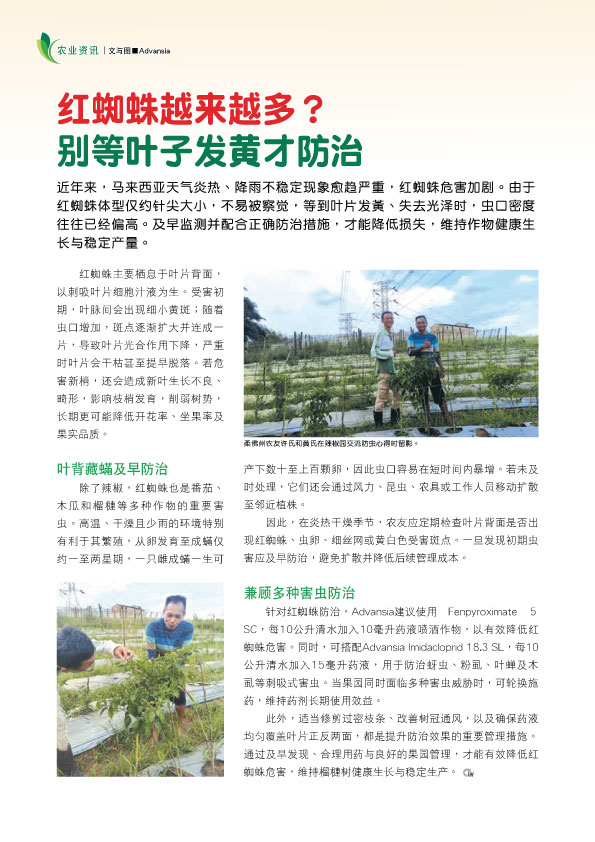
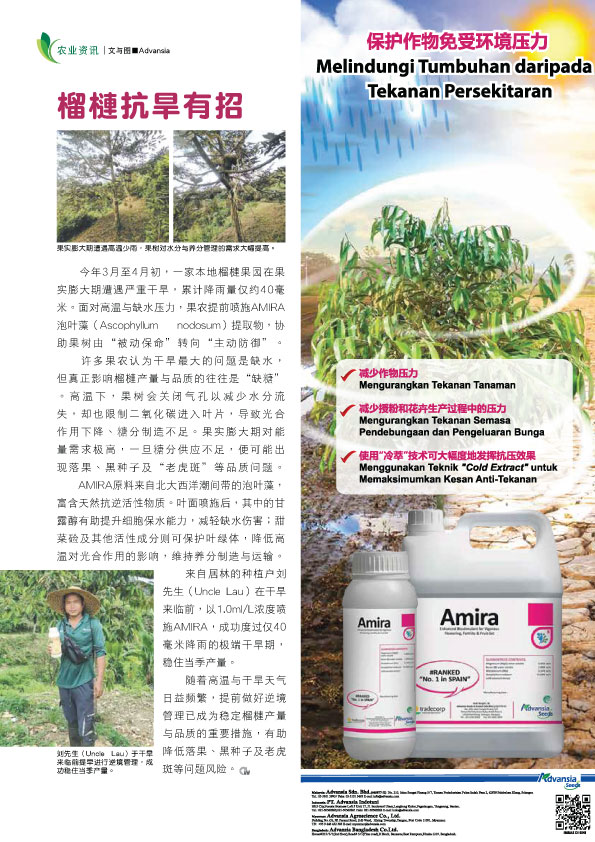
After the rainy season, the short dry period allows durian new shoots to sprout quickly, which is also the active period for sucking pests. How should farmers control pest infestation? During the rainy season, when is the best time to apply insecticides to maximise efficiency and reduce the chance of pesticides being washed away?
The rainy season is approaching. For durian growers, this is both good news and a challenge. While continuous rainfall helps relieve drought pressure, some pests also quietly become active. Psyllids and leafhoppers can be suppressed by rain to a certain extent, but they are not easily washed away completely. When durian trees quickly produce new shoots after rain, these sucking pests become a “hidden concern”.
Durian Psyllids: A Hidden Threat During the Rainy Season
Durian psyllids are usually active on the back of young leaves. Heavy rain and humid conditions may reduce their activity, but this does not mean they can be ignored. During the short dry period after rain, new shoots grow rapidly and attract durian psyllids to become active again.
Although they are small, they can suck sap from leaves, causing leaf deformation and growth stagnation, affecting the health of durian trees.
Durian Leafhoppers: A Challenge After Rain
Durian leafhoppers may be suppressed to a certain extent during the rainy season, but they also have their own survival strategy. When sunny weather appears between rainy days, leafhoppers quickly reproduce and move towards new shoots.
Under leafhopper damage, leaves may turn yellow and curl, eventually affecting durian tree growth.
Rainy Season Application Tips
When applying insecticides during the rainy season, timing is extremely important. Farmers should apply pesticide when there is no rain and take immediate action once the rain stops. This helps maximise control efficiency and reduce the chance of pesticide being washed away.
In addition, farmers may consider using adjuvants to improve the adhesion of insecticides on the leaf surface.
Farmers’ Feedback
According to Mr. Lee, a farmer from Bentong, after using Advansia’s Lambda Cyhalothrin 2.8EC at 1.5ml mixed with 1 litre of water, together with Pymetrozine 50WG at 1g mixed with 1 litre of water, he was able to effectively control these pests and achieved satisfactory control results.