


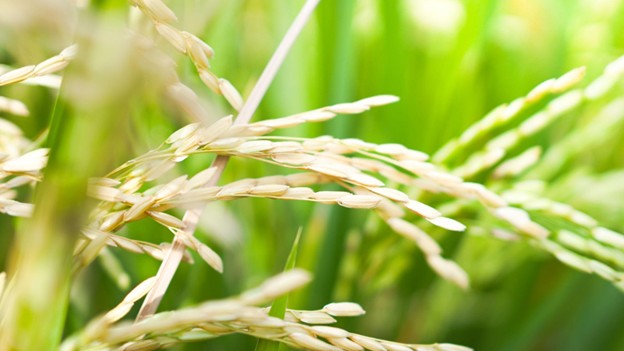
Rice, a staple food for Malaysians that we can’t live without, is the most important food crop for our agriculture.
However, challenges occur when many farmers may harvest less rice than they hoped or planned for due to unhealthy, undernourished, or insufficient or underdeveloped grains. Sometimes, fertilizer in the soil can be washed away by water, become stuck in the mud, or not be properly absorbed by plant roots, which leads to poor plant growth.
In the last 15–20 years, foliar feeding has only been actively researched, promoted, and adopted among farmers in Malaysia. With foliar feeding, spraying liquid fertilizer directly onto rice leaves instead of applying it only to the soil allows the leaves to absorb nutrients more quickly and efficiently. It improves rice yield, makes fertilizer more effective, and increases grain weight and quality.
This article explains how foliar sprays can help farmers boost grain quality and fullness.
1. Direct Nutrient Supply
When foliar sprays deliver nutrients directly to the leaves, micronutrients like zinc, boron, and magnesium are easily absorbed through tiny openings and the leaf skin. It gives quick nutrition to rice when roots cannot absorb enough from soil, helping the plant grow strong leaves, healthy stems, and well-filled grains throughout the season.
- Zinc supports overall plant growth
- Boron aids in the transformation of flowers into grains
- Magnesium is essential for photosynthesis
This will improve fertilization and grain filling and prevent the issue of panicles appearing full while many grains inside are empty and chaffy.
2. Helps the Plant Make More Food for Grains
Whereas nutrients like magnesium and nitrogen in foliar sprays boost chlorophyll production and improve photosynthesis. More photosynthesis means more carbohydrates produced that would be transported to grains, making them fuller, heavier and tastier.
- Helps the plant grow stronger stems and leaves
- Supports healthier grain development
- Can increase overall harvest quality
- Improves grain nutritional quality, including:
- Protein content
- Carbohydrate balance
- Antioxidant levels
This not only affects how full the grain looks, but instead what’s inside the grain as it increases grain nutritional quality which is important for human diets but also improves grain properties like protein content, carbohydrate balance, and antioxidant levels.
3. Grow More Rice per Field
Farmers might not know that research shows rice fields using foliar spray can yield about 9% more than traditional methods. Foliar feeding helps rice grow stronger, produce fuller grains, and increases the total harvest per field. Spraying nutrients directly on the leaves is much more effective than spreading fertilizer on the soil, because the plant can take in almost all the nutrients, instead of losing them to the soil, runoff, or evaporation. This means farmers get more rice from the same field, use fertilizer more efficiently, and can save money while improving crop quality.
4. Helps Plants in Tough Weather
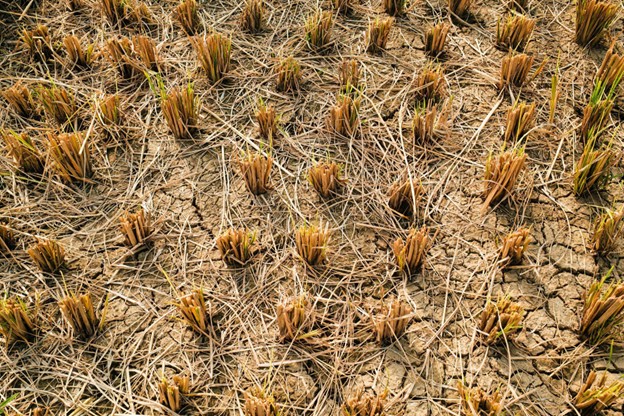
Sometimes, the soil doesn’t provide enough nutrients, which is where foliar feeding comes into play. It helps the plant obtain what it needs, especially during stressful times like drought or heat and helps them grow stronger and recover faster. In this sense, foliar feeding acts as a supplement rather than a replacement for soil nutrients. It’s important to view it as extra support because, despite challenging soil conditions, plants still require adequate nutrients from the soil. When combined with proper soil fertilization, foliar feeding can enhance the overall health of the plant.
Best Times to Spray
Frequency
The frequency of spraying plays an important role as well. When should you spray? It’s not necessary to spray every day; instead, focus on key times. Spray when the plant is growing leaves to promote growth, before flowering to increase grain production, during flowering to reduce empty grains, and while the grains are filling to ensure they become plump. Typically, 3 to 5 sprays in a season are sufficient. Remember, too much water can also hurt the plant, so avoid overwatering while spraying. Following this schedule carefully can help maximize yield and make your harvest more profitable.
Weather
The weather is very important when spraying nutrients on paddy leaves. The spray needs time to stay on the leaves and dry so the plants can absorb the nutrients properly.
- If it is too windy, the spray may blow away or spread unevenly, so some plants get too much while others get too little.
- If it rains soon after spraying, the rain can wash the nutrients away before the plants can absorb them.
- If the weather is too hot or too cold, the plants may also have difficulty taking in the nutrients.
The best time to spray is when the weather is mild, calm, and dry, with no rain expected for at least one or two days. This gives the plants enough time to absorb the nutrients well.
Concentration
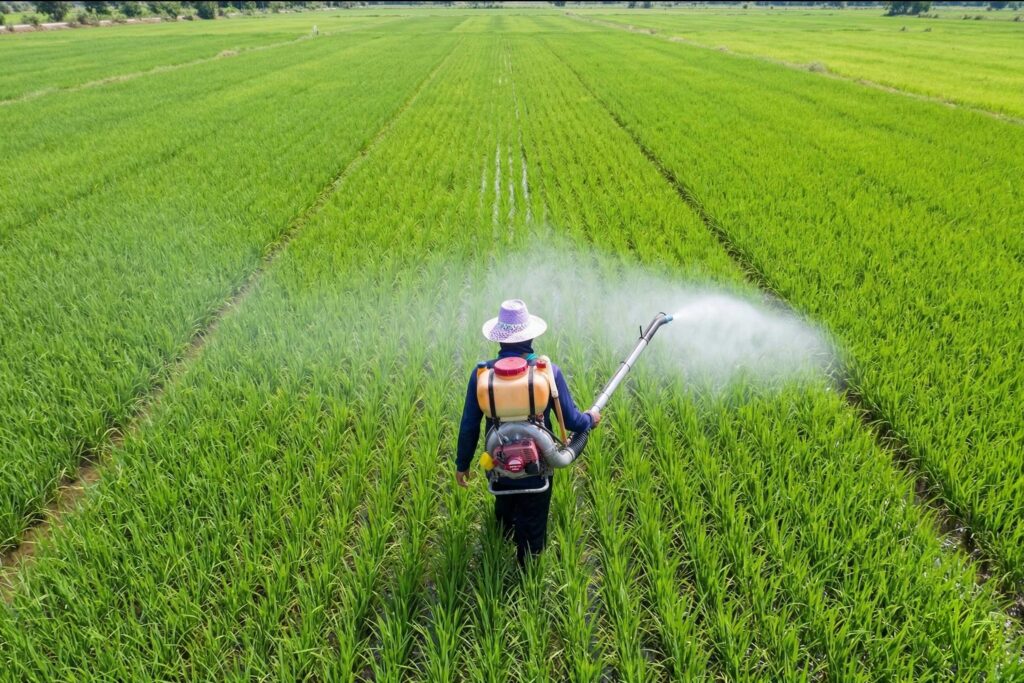
How strong the fertilizer spray matters too.
- If the concentration is too high, it can stress the plant, damage its normal functions, and reduce its benefits. In some cases, it can even burn the leaves.
- If the concentration is too low, the plant may not get enough nutrients to grow well.
Different amounts of fertilizer mixed with water (for example, grams per liter) can lead to different results in paddy growth and harvest. This means farmers should not use too little or too much, but the correct dosage. The right fertilizer concentration helps paddy plants grow better, while the wrong concentration can harm them.
Compatibility With Pesticides / Other Sprays
If you mix pesticides and fertilizers (like foliar nutrients) in the same spray tank, the results can be positive, neutral, or even harmful. Some combinations work well, some have no effect, and some can reduce effectiveness or even damage the paddy. The key is simple: know which products are compatible before mixing. Adding foliar fertilizer to a pesticide solution can change important properties like pH, surface tension, and how well the spray stays on the leaves.
Key Takeaway
can give bigger, fuller grains, so you get more rice to sell. It also makes plants stronger, helping them survive heat or drought better than before. Fertilizer works more efficiently, which can save money in the long run.
References
- Almeida, L. J. M. de, Barbosa da Silva, J. H., Araújo, J. R. E. S., Cruz, J. M. F. de L., Silva, F. G. da, Barbosa, E. da S., … Silva, E. de S. (2022). Foliar fertilizer management for tolerance to water drought in sugarcane. Scientific Electronic Archives, 15(7). https://doi.org/10.36560/15720221563
- Assunção, H. H. T., Alves, G. S., Silva, S. M., & Cunha, J. P. A. R. (2019). Tank mixture of pesticides and foliar fertilizers for agroeconomic application: Effects on chemistry and spray deposition. Revista Ceres, 66(4), 297–306. https://www.researchgate.net/publication/336229400
- Balachandra, Y., Kishan Tej, M., Jhonson Raju, S., & Jayachandra Reddy, B. (2025). Foliar fertilization for nutrient use efficiency. International Journal of Agriculture and Nutrition, 7(9), 96–101. https://doi.org/10.33545/26646064.2025.v7.i9b.293
- Dune, University of Angers. (2018). Foliar fertilization: Environmental effects on nutrient absorption. https://dune.univ-angers.fr/system/files/depots/17007256/2018TMBV9152/9152F.pdf
- El-Okkiah, S. A. F., El-Afry, M. M., Shehab Eldeen, S. A., El-Tahan, A. M., Ibrahim, O. M., Negm, M. M., Alnafissa, M., El-Saadony, M. T., Almazrouei, H. M. R. S., AbuQamar, S. F., El-Tarabily, K. A., & Selim, D. A. (2022). Foliar spray of silica improved water stress tolerance in rice (Oryza sativa L.) cultivars. Frontiers in Plant Science, 13, 935090. https://doi.org/10.3389/fpls.2022.935090
- Fernández, V., Sotiropoulos, T., & Brown, P. (2013). Foliar fertilization: Scientific principles and field practices. International Fertilizer Industry Association. https://www.fertilizer.org/knowledge/foliar-fertilization
- Gandini, E. M. M., Costa, E. S. P., dos Santos, J. B., Soares, M. A., Barroso, G. M., Corrêa, J. M., Carvalho, A. G., & Zanuncio, J. C. (2020). Compatibility of pesticides and/or fertilizers in tank mixtures: Interactions and impacts. Journal of Cleaner Production. https://www.sciencedirect.com/science/article/abs/pii/S0959652620321995
- Gharieb, A. S., Hashem, I. M., Ghazy, H. A., & Abdel-Fattah, A. G. (2025). Impact of foliar nutrients spray and plant growth regulators on growth, production, and grain quality of rice. Menoufia Journal of Plant Production, 10(1), 1–10. https://mjppf.journals.ekb.eg/
- International Journal of Research in Agronomy. (2025). High humidity, moderate temperatures, and calm wind conditions promote longer droplet retention on the leaf surface and enhance nutrient absorption. 8(12S), Part C. https://www.agronomyjournals.com/archives/2025/vol8issue12S/PartC/S-8-12-25-497.pdf
- Prestoza, M. J. R., Gaspar, J. A. D., & Pedro, A. T. M. C. (2024). Foliar fertilization in hybrid rice. EDUCATUM Journal of Science, Mathematics and Technology, 11(2), 34–41. https://doi.org/10.37134/ejsmt.vol11.2.4.2024

