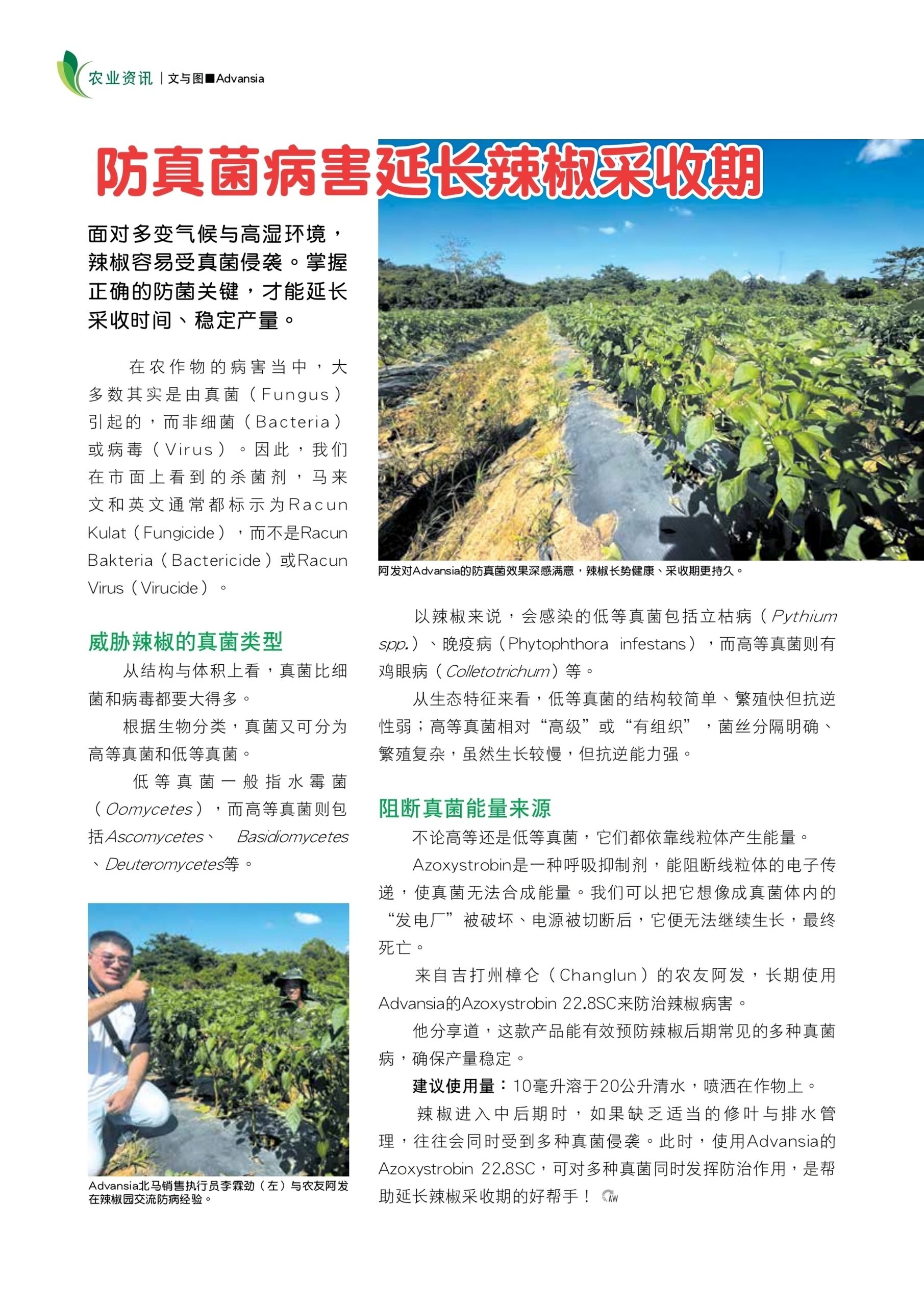
Facing changing climates and high-temperature environments, chilli plants are easily attacked by fungal infections. Mastering the correct key to fungal disease prevention is essential to extend harvesting time and stabilise yield.
Among crop diseases, most are actually caused by fungi, rather than bacteria or viruses. Therefore, the fungicides commonly seen in the market are usually labelled in Malay and English as Racun Kulat (Fungicide), instead of Racun Bakteria (Bactericide) or Racun Virus (Virucide).
Types of Fungi That Threaten Chilli
In terms of structure and size, fungi are much larger than bacteria and viruses.
According to biological classification, fungi can also be divided into higher fungi and lower fungi.
Lower fungi generally refer to Oomycetes, while higher fungi include Ascomycetes, Basidiomycetes, Deuteromycetes and others.
For chilli, common lower fungal infections include damping-off disease (Pythium spp.) and late blight (Phytophthora infestans), while higher fungal infections include anthracnose (Colletotrichum) and others.
From the perspective of biological characteristics, lower fungi have simple structures, reproduce quickly, and have weak resistance. Higher fungi are relatively more “advanced” or “organised”, with clear separation of fungal filaments and complex reproduction. Although they grow slowly, they have stronger resistance.
Blocking the Energy Source of Fungi
Whether higher fungi or lower fungi, they all rely on mitochondria to produce energy.
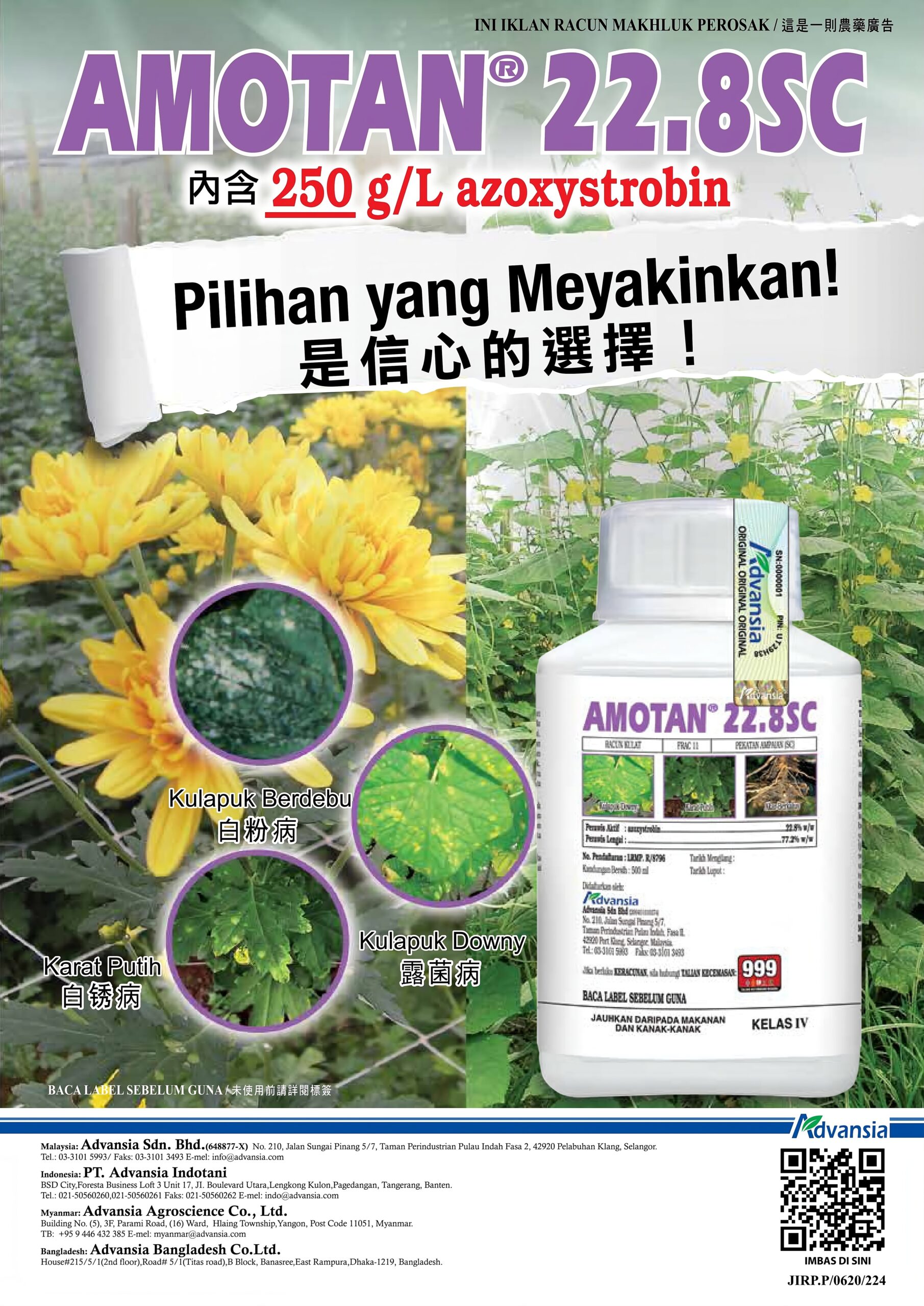
Azoxystrobin is a type of respiration inhibitor that can block electron transfer in the mitochondria, preventing fungi from producing energy. We can imagine it as the “power plant” inside the fungal body being damaged. Once the power supply is cut off, the fungus can no longer continue growing and will eventually die.
A farmer named Ah Fatt from Changlun, Kedah, has long used Advansia’s Azoxystrobin 22.8SC to prevent and control chilli diseases.
He shared that this product can effectively prevent many common fungal diseases after chilli harvesting, helping ensure stable yield.
Recommended dosage: Dissolve 10ml in 20 litres of clean water and spray on the crops.
When chilli enters the mid-to-late growth stage, if proper pruning and drainage management are lacking, it is often attacked by several fungal diseases at the same time. At this stage, using Advansia’s Azoxystrobin 22.8SC can provide preventive and control effects against multiple fungal diseases at once, making it a good helper in extending the chilli harvesting period.
Follow us as we highlight these essential tools and their impact on sustainable farming practices — one solution at a time.