share this info:
Supply of Active Ingredients Tightens
Advansia Sdn. Bhd. Managing Director Lam Chin Hee, in an interview with Agroworld, pointed out that blindly reducing planting scale or stopping production is not a long-term solution. Farmers should seek more flexible ways to respond.
Supply of Active Ingredients Tightens
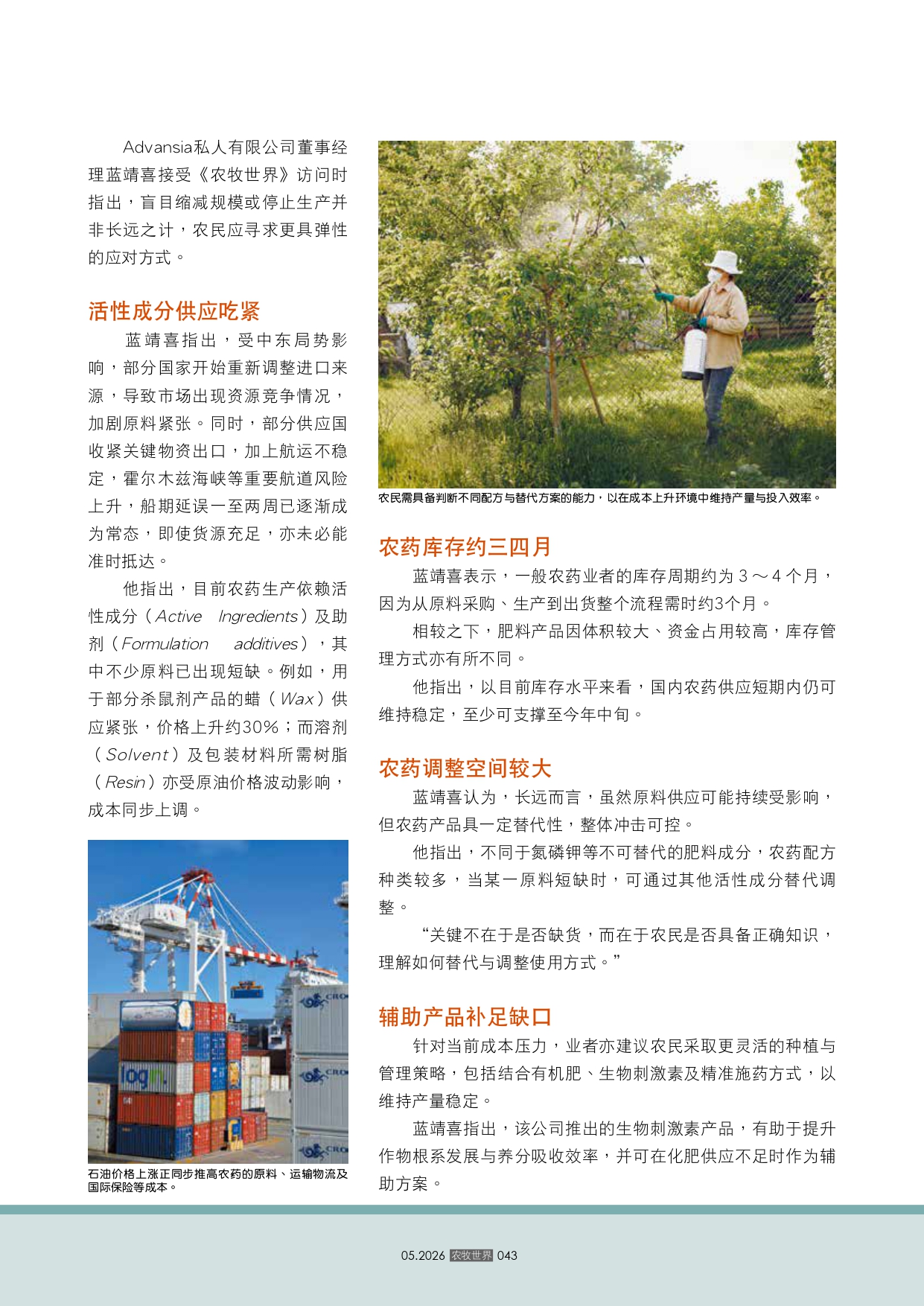
Lam Chin Hee pointed out that due to the impact of the Middle East situation, some countries have begun to readjust their import sources, resulting in market competition for resources and further tightening of raw materials. At the same time, some supplier countries have tightened exports of key materials. Coupled with unstable shipping conditions, risks on major routes such as the Strait of Hormuz have increased, and shipment delays of one to two weeks have gradually become common. Even when supply is sufficient, goods may not be able to arrive on time.
He explained that pesticide production currently depends on active ingredients and formulation additives, and some raw materials are already in shortage. For example, the wax used in certain rodenticide products is facing tight supply, with prices rising by about 30%. Solvents and resins used in packaging materials are also affected by crude oil price fluctuations, causing costs to rise at the same time.
Pesticide Inventory Lasts Three to Four Months
Lam Chin Hee stated that pesticide businesses generally keep inventory for about three to four months, as the entire process from raw material procurement and production to shipment usually takes around three months.
In comparison, fertiliser products are larger in volume, require higher capital commitment, and have different inventory management methods.
He pointed out that based on current inventory levels, the domestic pesticide supply should remain stable in the short term and can support demand at least until the middle of the year.
Pesticides Have Greater Room for Adjustment
Lam Chin Hee believes that in the long run, although raw material supply may continue to be affected, pesticide products have a certain level of substitutability, and the overall impact remains controllable.
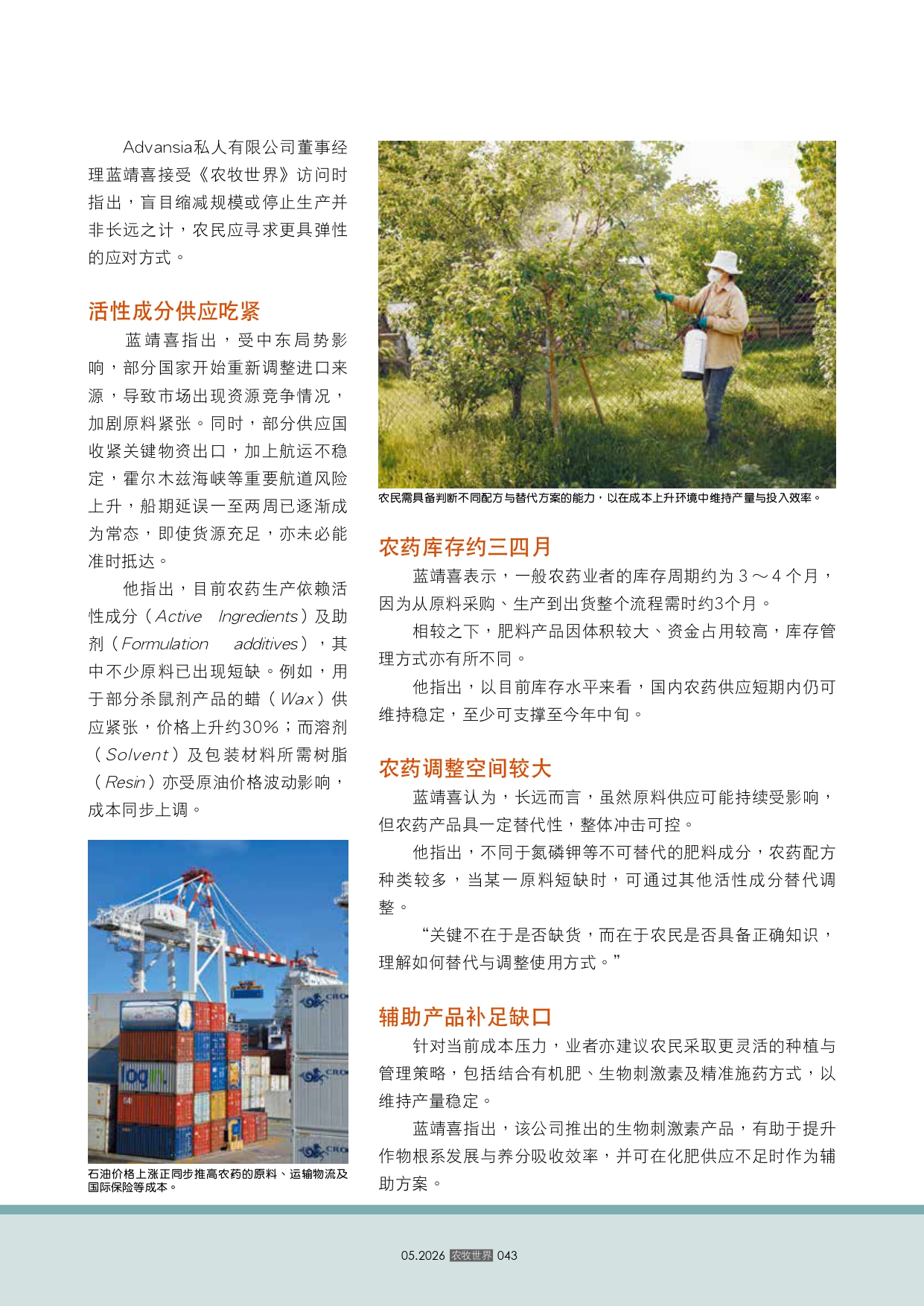
He explained that unlike fertiliser nutrients such as nitrogen, phosphorus, and potassium, which are not easily substituted, pesticide formulations come in many varieties. When a certain raw material is in shortage, adjustments can be made by replacing it with other active ingredients.
“The key is not whether there is a shortage of goods, but whether farmers have the correct knowledge to understand how to substitute and adjust their usage methods.”
Supplementary Products Help Fill the Gap
In response to current cost pressure, industry players also advise farmers to adopt more flexible planting and management strategies. These include combining organic fertilisers, biostimulants, and precise application methods to maintain stable production.
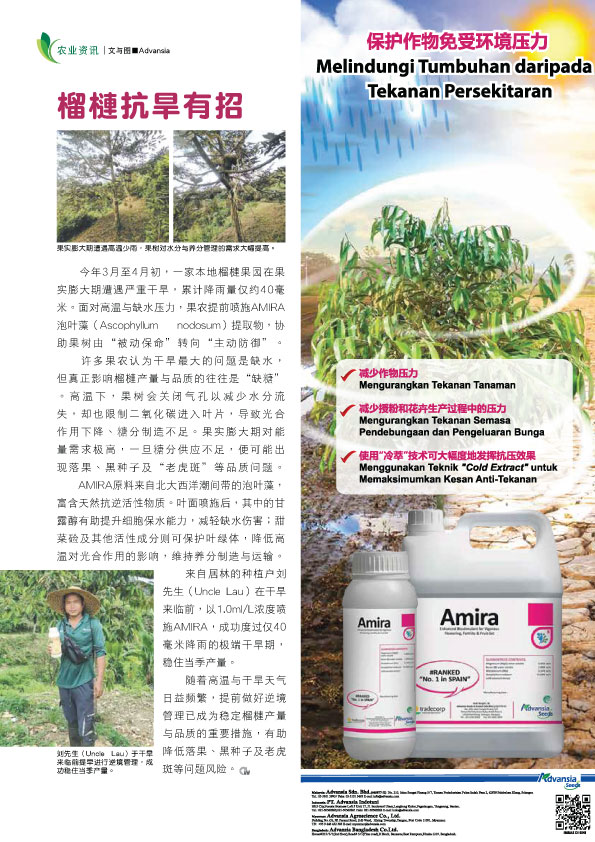
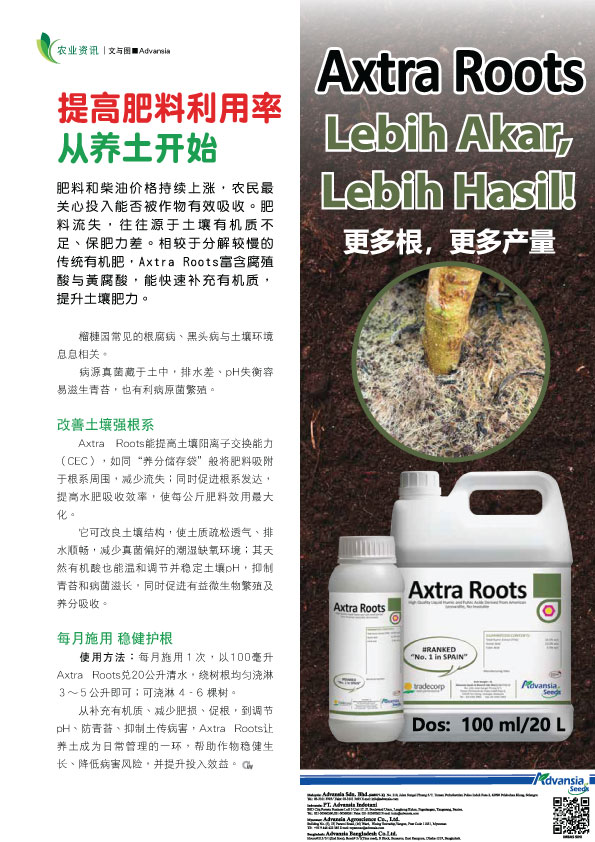
Lam Chin Hee stated that the biostimulant products introduced by the company can help improve crop root development and nutrient absorption efficiency, and can serve as a supplementary solution when fertiliser supply is insufficient.
At Advansia, we continue to focus on practical, field-tested solutions that match the real conditions faced by Malaysian growers. Whether the need is better flower retention, stronger fruit development, or more reliable disease control, timely action and suitable crop strategies remain key to achieving more stable results in the field.
📌 Explore more solutions or contact our team for customized advice at www.advansia.com